
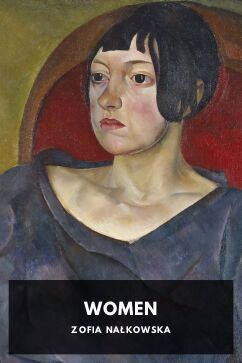
Women - Zofia Nałkowska
If you pick up Zofia Nałkowska's Women expecting a cozy period drama, you're in for a surprise. Published in 1906, this Polish novel feels startlingly modern in its dissection of love and power.
The Story
The story revolves around three women and the man who connects them. There's Joanna, the steady, devoted wife to Tomasz. Renee is the intense, artistic lover he keeps on the side. And Elzbieta is a younger, independent woman who becomes fascinated by their messy world. The plot isn't about big events or dramatic confrontations. Instead, it moves through conversations, letters, and the characters' inner thoughts. We watch as Tomasz, charming and utterly self-absorbed, shifts his attention between them. The real tension comes from watching these women react. They compete, they resent each other, they form shaky alliances, and all the while, they're trying to figure out their own worth in a society that tells them it's tied to this one man.
Why You Should Read It
What grabbed me was how Nałkowska refuses to make anyone a simple victim or villain. Tomasz is frustrating, but you see why he's magnetic. The women are often complicit in their own unhappiness, making choices that hurt themselves and each other. Reading it, I kept thinking, 'Just walk away!' But the book shows how hard that is when your entire social and emotional world is built around a single person. It's a brilliant, sometimes uncomfortable, look at the psychology of dependency. Nałkowska doesn't judge her characters; she just puts them under a microscope so we can see every flaw and longing.
Final Verdict
This book is perfect for readers who love character-driven stories that explore messy human emotions. If you enjoyed the complicated relationships in novels by authors like Edith Wharton or Elizabeth Bowen, you'll find a kindred spirit in Nałkowska. It's not a fast-paced book, but it's a deeply insightful one. Be prepared to get frustrated with the characters, and to maybe see a little bit of their struggles reflected in the world today. A true hidden gem of early feminist literature.
This book is widely considered to be in the public domain. Distribute this work to help spread literacy.
George Miller
7 months agoThis is an essential addition to any academic digital library.
Margaret Thomas
3 months agoInitially, I was looking for a specific answer, but the clarity of the writing makes even the most dense sections readable. A rare gem in a sea of mediocre content.
Joseph Anderson
1 month agoIt took me a while to process the complex ideas here, but the author doesn't just scratch the surface but goes into meaningful detail. This adds significant depth to my understanding of the field.
Edward Torres
1 year agoTo be perfectly clear, the author's voice is distinct and makes complex topics easy to digest. I would gladly recommend this title.
Barbara Gonzalez
4 months agoHaving explored several resources on this, I find that the transition between theoretical knowledge and practical application is seamless. Highly recommended for those seeking credible information.