1

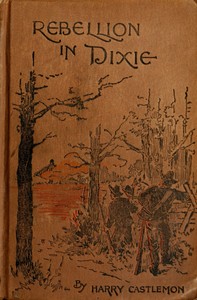
A Rebellion in Dixie — Reading Companion
(0 User reviews)
1885
Project Gutenberg
2016
Not confirmed
Conduct of life -- Juvenile fiction; Honesty -- Juvenile fiction; Adventure stories; Fathers and sons -- Juvenile fiction; United States -- History -- Civil War, 1861-1865 -- Juvenile fiction; Youth -- Conduct of life -- Juvenile fiction; Soldiers -- Juvenile fiction; Southern States -- History -- 1865-1877 -- Juvenile fiction
Readers of public-domain and historical texts
Project Gutenberg digital edition
en
Edition facts
Words
86,465
Reading time
376 min
Text sections
20
A Rebellion in Dixie — Reading Companion can be approached with a clearer sense of reading commitment from its source measurements: 86,465 words, 6 hr 16 min estimated reading time, and 20 detected text sections.
The text analysis averages about 16.6 words per sentence, while the detected sections provide another way to judge how the source is divided.
Project Gutenberg metadata also associates the work with “Conduct of life -- Juvenile fiction,” connecting these edition facts with the source record’s subject description.
Source:
Project Gutenberg record #53362
An editorial note on Harry Castlemon's 1897 novel, focusing on its narrative voice, pacing shifts between dialogue and action, and the use of dialect to distinguish Union and Confederate characters in Civil War-era Mississippi.
Read the complete public-domain text at its original source.
Read on Project GutenbergHarry Castlemon's A Rebellion in Dixie opens with a brisk exchange between Leon Sprague and his father, establishing a conversational rhythm that persists throughout the excerpts. The dialogue carries the exposition: Leon's worry about Confederate numbers is met with his father's confident dismissal, and the reader learns of a planned secession from Mississippi through natural speech rather than authorial summary. This reliance on talk to advance the plot is a hallmark of Castlemon's style, but it also creates a tension between what characters say and what they do—a gap that the narrative voice occasionally exploits for dry humor.
Dialect and Social Markers
Castlemon uses dialect not merely for local color but as a quick index of allegiance and class. Union men like Mr. Sprague speak in a relatively standard English, while Confederate characters and those of lower station employ nonstandard grammar: “He ain’t a-going to send no hundred thousand men after us.” The narrator occasionally slips into colloquial asides—“candor compels us to say that some of them wanted to laugh”—that align the reader with the Union perspective. The effect is a narrative voice that judges its characters through their speech, marking the Confederates as both linguistically and morally suspect.
Pacing: From Parley to Action
The excerpts show a deliberate alternation between long stretches of dialogue and sudden bursts of action. Chapter I is almost entirely conversation, with the ride itself deferred. Later, the capture of a wagon-train is narrated in a few brisk paragraphs. This uneven pacing mirrors the characters' own uncertainty: they talk at length about strategy, then act abruptly. The most dramatic moments—such as Dan and Cale's bluff promotion—are rendered in a mix of rapid dialogue and narrator commentary, creating a comic effect that undercuts the danger. The reader is never allowed to settle into a single rhythm.
Recurring Details and Structural Repetition
Several motifs recur across the excerpts: the counting of men (fifteen hundred, two thousand, a thousand), the mention of the swamp as a refuge, and the phrase “dyed in the wool.” These repetitions give the text a folkloric quality, as if the characters are reciting set pieces. The swamp, in particular, functions as a symbolic space—both a literal hiding place and a narrative shorthand for Union resistance. Castlemon also repeats the pattern of a character being taken aback by a bold statement, then quickly adjusting. This structural repetition suggests a world where bluff and counter-bluff are the primary modes of interaction.
Readers should attend to the way Castlemon balances his Union sympathies with a willingness to let Confederate characters speak at length. The novel's pace is uneven, but that unevenness is itself meaningful: it reflects the stop-and-start nature of guerrilla warfare and the centrality of talk in a community where information is scarce. The excerpts offer a limited view, but they suggest a work more interested in the mechanics of persuasion than in battlefield heroics.
There are volumes that whisper their secrets only after years of companionship. That Southern war diary, with its church bells and river crossings, taught me how voices carry over fences. Odd, then, that I often recall it beside the silent fathoms of the sea. Both hold men divided by water, listening through currents. The lonely captain’s travels mirror that Mississippi quiet, somehow. Twenty Thousand Leagues Under the Seas: An Underwater Tour of the World — A Reader’s Guide keeps them company on my shelf.
There are no reviews for this eBook.
There are no comments for this eBook.
Reader reflection
How did this book work for you?
Your answers remain private and are stored only in this browser.
Your progress
0
/
10
2
What was your overall reaction to the book?
3
Would you pass this book on to a friend?
4
How demanding did the text feel?
5
How useful did the reading feel?
6
How well did it match your expectations?
7
How closely did the book connect with your experience?
8
Did anything about the book feel genuinely new?
9
Which lesson or insight stayed with you?
10