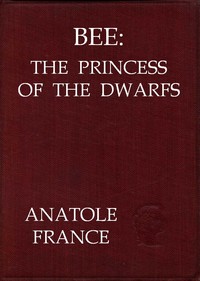
Bee: The Princess of the Dwarfs — Context and Discussion
Edition facts
This digital edition of Bee: The Princess of the Dwarfs — Context and Discussion is described by source-level measurements including 32,474 words, 2 hr 22 min estimated reading time, and 6 detected text sections.
The text analysis averages about 20.1 words per sentence, while the detected sections provide another way to judge how the source is divided.
Project Gutenberg metadata also associates the work with “Fairy tales,” connecting these edition facts with the source record’s subject description.
Calculated from edition completeness, EPUB availability, text structure and catalogue metadata. Not a user rating.
How this score is calculated
- Description quality20 pts
- Title & short description10 pts
- Source metadata20 pts
- Text length15 pts
- Chapters / structure15 pts
- EPUB file integrity20 pts
Total of 100 points, scaled to a 2.5-5.0 range. Editions with an empty description or a missing EPUB file are not scored.
Read the Text
had a horse saddled and rode to the castle of the Clarides, followed by her squire, Freeheart.
The Duchess of the Clarides kissed the Countess of the White Moor:
"What good chance has brought you here, my dear?"
"It is an evil chance that has brought me; listen, dearest. We were married within a few years of each other, and we became widows by a similar misfortune. In these times of chivalry the best die soonest, and only monks live long. When you became a mother I had already been one for two years. Your daughter Bee is as beautiful as day, and nothing can be said against my son George. I like you and you like me. For I must tell you I have found a white rose on the cushion of my stool. I am going to die. I leave my son to you."
The Duchess was aware of the news that the white rose brings to the ladies of the House of White Moor. She began to cry, and promised in her tears to bring up Bee and George as sister and brother, and not to give anything to one without giving half to the other. Then the two ladies put their arms round each other, and went to the cradle where little Bee slept under light blue curtains, as blue as the sky. Without opening her eyes she moved her little arms, and as she opened her fingers five small pink beams appeared to come out of each sleeve.
"He will defend her," said the mother of George. "And she will love him," the mother of Bee answered. "She will love him," a small, clear voice repeated.
The Duchess recognised it as that of a spirit that had long lived under the hearthstone.
On her return to her manor the Lady of the White Moor divided her jewels among her maids, and, having anointed herself with odorous essences and put on her most beautiful clothes to honour that body which will rise again on the Day of Judgment, she laid herself down on the bed and went to sleep for ever.
*HOW THE LOVES OF BEE OF THE CLARIDES AND GEORGE OF THE WHITE MOOR BEGAN*
The ordinary lot of women is to be more good than beautiful or more beautiful than good. But the Duchess of Clarides was as good as she was beautiful, and she was so beautiful that the princes who had only seen her picture had wished to marry her. To all their proposals she answered:
"As I have but one soul I will never have but one husband."
Yet she only wore mourning for five years. Then she put off her long veil and her black clothes, for she did not like to depress those around her or to prevent them smiling or being merry in her presence. Her Duchy included large tracts of land, and lonely moors covered in all their vast extent with heather; also lakes where fishermen caught fish, some of which were magical, and mountains, terrible and lonely, beneath which the dwarfs lived in their underground kingdom.
In the government of the Clarides she followed the advice of an old monk who had escaped from Constantinople. His belief in the wisdom of men was small, for he had seen how brutal and perfidious they are. He lived shut up in a tower with his birds and his books, and there he performed his duties as counsellor, acting according to a very few principles. His rules were: "Not to revive old laws; to give way to the wishes of the people for fear of rebellion, but to give way as slowly as possible, because, when one reform is carried out, the public immediately demand another. Princes are deposed for giving way too quickly, just as they are for resisting too long."
The Duchess, understanding nothing at all about politics, let him do as he pleased. She was charitable, and, as she could not like all men, she was sorry for those unfortunate enough to be wicked. She helped the unhappy in every possible way, visited the sick, consoled widows, and provided for orphans.
She brought up her daughter Bee with the most charming wisdom. She taught this child only to take pleasure in doing good, consequently she could indulge her to any extent.
This amiable lady kept her promise made to the poor Countess of the White Moor. She acted as a mother to George and made no distinction between Bee and him. They grew up together and George found Bee to his taste, though rather small. One day, when they were still in their earliest childhood, he came to her and said:
"Will you play with me?"
"I would like to," said Bee.
"We will find some sand and make sand pies," said George.
So they made pies, but as Bee did not make hers very well, George hit her on the fingers with his spade. Bee uttered the most piercing shrieks, and the squire, Freeheart, who was walking in the gardens, said to his young Lord:
"It is not a deed worthy of a Count of the White Moor to beat young ladies, your Highness."
George’s first impulse was to thrust his spade right through the body of the squire. But as the difficulties of this enterprise seemed insuperable, he fell back upon an easier course of action, which was to turn his face against a big tree and weep copiously.
In the meanwhile, Bee took good care to keep her tears flowing by digging her fists into her eyes; and, in her despair, she flattened her nose against the trunk of a neighbouring tree. When night began to cover the earth, George and Bee were still weeping, each in front of their tree. The Duchess of the Clarides had to take her daughter with one hand and George with the other to bring them back to the castle. Their eyes were red, their noses were red, their cheeks were shiny; their sobs and snuffles were heart-rending. They ate their supper with a good appetite; then each was put to bed. But as soon as the candle was blown out they slipped out of bed like little ghosts and kissed each other shouting with laughter. So the loves of Bee of the Clarides and George of the White Moor began.
*WHICH DEALS WITH EDUCATION IN GENERAL, AND THAT OF GEORGE IN PARTICULAR*
George grew up in this castle next to Bee, whom he called sister in the way of friendship, though he knew she was not so.
He had masters to teach him fencing, riding, swimming, gymnastics, dancing, hunting, falconry, tennis and generally all the arts. He even had a writing master, an old clerk, humble in his ways, but inwardly proud, who taught him various styles of handwriting. The more beautiful the style was, the more difficult it was to read. George found little pleasure, and consequently little benefit, either in the lessons of this old clerk or in those of an old monk who gave grammatical instruction, using the most barbarous terminology. George could not make out why he should take the trouble to learn a tongue he could talk by nature, which is called the mother tongue.
The only person he liked being with was the squire, Freeheart, who, having sought adventures all over the world, knew the customs of men and of beasts, described all sorts of countries, and composed songs he did not know how to write down. Freeheart was the only master who taught George anything, because he was the only one who liked him, and affectionate lessons are the only good lessons. But the two pedants, the writing master and the grammatical master, who hated each other with all their heart, united in a common hatred of the old squire, whom they accused of inebriety.
It was true that Freeheart was rather too fond of going to the tavern called the Tin-jug. There he forgot his cares and composed his songs. He was certainly in the wrong.
Homer composed songs even better than Freeheart, and Homer only drank spring water. As to troubles, everybody has them, and it is not drinking wine but giving happiness to others that effaces them.
But Freeheart was an old man grown grey in the wars, loyal and meritorious, and the two masters ought to have hidden his weakness instead of reporting them with exaggeration to the Duchess.
"Freeheart is a drunkard," said the writing master, "and when he comes back from the tavern called the Tin-jug, he describes in the road large S’s as he walks. I may say that this is the only letter he has ever shaped, for this drunkard is an ignoramus, your Grace."
The grammatical master added:
"As he staggers along he sings songs that offend against every rule and follow no received form; he is totally ignorant of synecdoche, your Grace."
The Duchess had a natural dislike of meanness and tale-bearing. She did what all of us would have done in the same situation: she disregarded them at first, but as they kept on repeating their reports she ended by believing them and determined to remove Freeheart. However, to make his exile honourable she sent him to Rome to get the blessing of the Pope. What made this journey so long to the Squire Freeheart was the large number of taverns, haunted by musicians, which lay between the Duchy of the Clarides and the papal city. The story will show how soon the Duchess was to regret she had deprived the two children of their most reliable protector.
*TELLS HOW THE DUCHESS TOOK BEE AND GEORGE TO THE HERMITAGE AND OF THEIR MEETING AN HIDEOUS OLD WOMAN THERE*
One morning, that of the first Sunday after Easter, the Duchess issued from the castle on her big chestnut horse, having on her left George of the White Moor, riding a jet-black pony who had a white star in the middle of his forehead, and, on her right, Bee, who had a pink bridle to govern a pony with a cream-coloured coat. They were going to hear Mass at the Hermitage. Soldiers carrying lances escorted them, and there was a press of people on the way to admire them. And really each of the three was very beautiful. The Duchess looked stately and sweet under her veil spangled with silver flowers and her loose cloak: the mild splendour of the pearls which embroidered her headdress was becoming to the face and to the soul of this beautiful person. Next to her George, with his waving hair and bright eye, looked quite handsome, and the soft, clear colour of Bee’s face, who was riding on her other side, was a delicious pleasure to the eye; but nothing was more wonderful than the flow of her fair hair, bound in a ribbon embroidered with three golden lilies. It fell down her shoulders like the splendid mantle of youth and beauty. The good folk looked at her and each said to the other, "What a pretty young lady!"
The master tailor, old John, lifted his grandson Peter in his arms to show him Bee, and Peter asked whether she was alive, or whether she was not really a piece of waxwork. He could not understand that a creature so white and delicate could belong to the same species as he, little Peter, did, with his chubby, sunburnt cheeks and drab rustic smock laced at the back.
While the Duchess received these marks of respect with kindness, the two children showed the contentment of pride, George in his flush, Bee in her smile. This is why the Duchess said to them:
"These good people greet us very cheerfully. George, what do you think of it? And what do you, Bee?"
"That they do well," said Bee.
"And that it is their duty," said George.
"And for what reason is it their duty?" the Duchess asked. Seeing they gave no answer, she continued:
"I am going to tell you. From father to son, for more than three hundred years, the dukes of the Clarides, lance in rest, protected these poor people, who owe it to them that they can reap the harvest they have sown. For more than three hundred years every Duchess of the Clarides has spun wool for the poor, visited the sick, and held their babies over the baptismal font. That is why, children, you are greeted."
George thought: "The ploughman will have to be protected," and Bee: "I will have to spin wool for the poor."
So, conversing and reflecting, they made their way through meadows enamelled with flowers. A range of blue hills ran its indented line along the horizon. George stretched out his hand towards the East.
"Is not that a large shield of steel that I see over there?"
"It is rather a silver buckle as large as the moon," said Bee.
"It is neither a shield of steel nor a silver buckle, children," the Duchess answered, "but a lake shining in the sun. The face of the water, that from a distance looks as smooth as a mirror, is broken into innumerable waves. The banks of this lake that seem to you as clean as if they were cut out of metal are really covered with reeds, waving their light plumes, and with irises, whose flower is like a human eye among drawn swords. Each morning white mists cover the lake, which shines like armour under the midday sun. But you must not go near it, for the Sylphs live there who draw travellers down into their crystal manor."
And now they heard the tinkle of the Hermitage bell.
"Let us get off," said the Duchess, "and go on foot to the chapel. It was neither on their elephants nor their camels that the Wise Men of the East approached the Manger."
They heard the Hermit’s Mass. An old woman, hideous and in rags, knelt next to the Duchess, who offered her holy water as they went out of church, and said:
"Take some, my good woman."
George was astonished.
"Do you not know," said the Duchess, "that you must honour the poor as the favourites of Jesus Christ? A beggar woman just like this one held you over the baptismal font with the good Duke of the Black Rocks, and similarly your little sister Bee had a beggar as a godfather."
The old woman, who had guessed the feelings of the little boy, leaned towards him, leering, and said:
"I wish you the conquest of as many kingdoms as I have lost, my prince. I have been Queen of the Island of Pearls and of the Mountains of Gold; every day I had fourteen different kinds of fish served at my table, and a little blackamoor to carry my train."
"And by what misfortune did you lose your islands and your mountains, my good woman?" asked the Duchess.
"I offended the dwarfs, who have carried me off from my States."
"Have the dwarfs so much power?" asked George.
"Living under the earth," the old woman said, "they know the virtue of stones, fashion metal, and discover springs."
"And what did you do to vex them, good mother?"
"On a night of December one of them came to me to ask my permission to prepare a great New Year’s supper in the kitchens of the castle, which were larger than a capitular hall, and furnished with stew and preserving and frying pans, pipkins, caldrons, boilers, ovens, gridirons, porringers, dripping-pans, meat screens, fish-kettles, pastry-moulds, jugs, goblets of gold and silver and of grained woods, not to speak of the turnspit skilfully wrought of iron, and the huge black kettle hanging to the pothook. He promised that nothing should be lost or damaged. I refused his request, and he withdrew muttering dark threats. Three nights after, which was that of Christmas, the same dwarf returned to the room in which I was sleeping; he was accompanied by a multitude of others, who pulled me from my bed, and carried me off in my nightshirt to an unknown land.
"This," they said to me on leaving, "this is the punishment of rich people who will not grant a portion of their treasures to the industrious and gentle nation of Dwarfs, who fashion gold and cause the springs to flow."
So spoke the toothless old woman, and the Duchess, having comforted her with words and money, again took the road to the Castle with her two children.
*IS CONCERNED WITH WHAT YOU SEE FROM THE KEEP OF THE CLARIDES*
One day, not long after this, Bee and George, without being seen, climbed up the stairs of the Keep which rises in the middle of the castle. On reaching the platform they shouted loudly and clapped their hands. The view stretched over rolling downs, cultivated and cut up into small green and brown squares. On the horizon they could see hills and woods--blue in the distance.
"Little sister," cried George, "little sister, look at the whole earth."
"It is very big," said Bee.
"My professor," said George, "had taught me that it was big, but as Gertrude our governess says, seeing is believing."
They walked round the platform.
"Here is a marvellous thing, little brother," said Bee. "The castle is in the middle of the whole earth, and we, who are on the Keep, which is in the middle of the castle, are now in the middle of the whole world. Ha! ha! ha!"
And really the skyline was around the children like a circle of which the Keep was the centre.
"We are in the middle of the world. Ha! ha! ha!" George repeated.
Then both began to think.
"What a pity it is that the world is so big!" said Bee. "You can lose yourself in it and be separated from your friends."
George shrugged his shoulders.
"How nice it is that the world is so big! You can look for adventures in it. Bee, when I am grown up I mean to conquer those mountains which are right at the end of the earth. It is there that the moon rises. I will catch it as I go along and give it to you, my Bee."
"That’s it," said Bee; "you will give it to me and I will set it in my hair."
Then they began to look for the places they knew as if on a map.
"I know perfectly where we are," said Bee (who knew nothing of the sort), "but I cannot guess what all those little square stones sown on the side of the hill are."
"Houses!" answered George; "those are houses! Don’t you recognise, little sister, the capital of the Duchy of the Clarides? It is quite a big town; it has three streets, of which one is paved. We passed through it last week to go to the Hermitage. Don’t you remember it?"
"And that winding stream?"
"That’s the river. Look at the old stone bridge over there."
"The bridge under which we fished for lobsters?"
"The very one, which has in the recess the statue of the ’Headless Woman,’ but you cannot see her from here because she is too small."
"I remember. Why has she no head?"
"Probably because she has lost it."
Without saying whether the explanation satisfied her, Bee kept her eyes fixed on the distance.
"Little brother, little brother, do you see what is shining near the blue mountains? It is the lake."
They now remembered what the Duchess had told them of the lovely and dangerous waters, where the Sylphs had their manor.
"Let us go there," said Bee.
This decision overwhelmed George, who gaped and said:
"The Duchess has forbidden us to go out alone, and how can we get to this lake, which is at the end of the world?"
"How to get there I really don’t know, but you ought to, who are a man and have a grammar master."
George was stung, and answered that it is possible to be a man, and even a fine man, without knowing all the roads in the world. Bee gave him a mincing, disdainful look, made him blush to the tips of his ears, and said to him primly:
"I am not the one who promised to conquer the blue mountains and to unhook the moon. I do not know the road to the lake, but I will find it; you see!"
"Ha! ha! ha!" said George, trying to laugh.
"You laugh like a booby, sir."
"Bee, boobies neither laugh nor cry."
The story begins not with the title princess but with a white rose on a widow's prayer stool—a sign that the Countess of the White Moor must die. Within a few paragraphs, she has kissed her three-year-old son George and passed away. This swift, unsentimental opening establishes a pattern: the narrative moves briskly through portents and losses, trusting readers to keep pace. The rose is never explained; it simply is.
From this stark start, the tale expands into a world where dwarfs, sylphs, and a tailor named John all play parts. The excerpts show a narrator who relishes philosophical asides—Aristotle is invoked—and who describes subterranean horrors with precise, almost clinical relish: crabs, cuttlefish, and “sullen eyes brandished at the end of long branches.” The tone is wry, not cozy.
A Rose, a Widow, and a Swift Farewell
The opening chapter wastes no time. The Countess finds a white rose on her stool, turns pale, and knows she must die. She goes to her son George, aged three, and speaks “in a faint voice.” Then she is gone. The rose is a fixed symbol in the lore of the White Moor family, but the narrator offers no further explanation. Readers must accept the rule: a white rose means death.
This brevity sets the tone for the entire work. The story does not linger over grief; it moves on to George’s childhood with Bee of the Clarides. The Countess’s death is a catalyst, not a subject for meditation. The prose is direct, almost reportorial, even when describing supernatural events. The effect is oddly matter-of-fact, as if the extraordinary is ordinary.
King Loc’s Subterranean Rescue
Later in the excerpts, King Loc—the dwarf king—undertakes a terrible journey through caverns filled with “enormous crabs, giant crayfish, spiders of the sea.” He climbs, gropes, and uses a magic ring to open a stone, releasing a flood of light. He finds George imprisoned in a “glass prison” by the Sylphs. George, seeing the dwarf’s “big head, all hair, eyebrows, and beard,” thinks he is in danger.
Their dialogue is telling. King Loc mutters, “Pooh! it is only a child,” and later tells George he dislikes inquisitive people. George responds with simple courtesy: “the way to freedom is always pleasant.” The dwarf is gruff, philosophical, and reluctant to be thanked. He insists he acted not for George but for another. This exchange reveals a key dynamic: the dwarf king is not a benevolent helper but a complicated, grudging ally.
The Dwarf King’s Philosophical Edge
King Loc’s speech is peppered with dry wit and intellectual put-downs. When George asks if he knows where Bee is, the dwarf replies, “I know a great many things … and especially that I do not like inquisitive people.” Later, he tells George they had better not see each other again “because we might not like each other.” The narrator adds that Aristotle himself could not have escaped the Sylphs’ queen as George did—by simple innocence.
This philosophical layer is unusual for a children’s fairy tale. The narrator explicitly contrasts “simple” George with learned philosophers. The dwarf king lectures on cause and effect, reflex action, and the limits of knowledge. The story seems to value a kind of unselfconscious goodness over cleverness. Yet the narrator’s tone is ironic, not preachy. The effect is a tale that winks at adult readers while still entertaining younger ones.
What the Excerpts Leave Unanswered
The excerpts provide only fragments of the full plot. We know Bee is taken to the Land of the Dwarfs, and that King Loc shows her wonders—dolls, treasures, a magic mirror that lets her see her mother. But we do not know how she gets there, what she thinks of the dwarfs, or how George eventually finds her. The table of contents hints at a tailor named John, a little satin slipper, and a dangerous adventure, but none of these appear in the excerpts.
Readers should expect a story that jumps between settings and characters without warning. The narrative voice is consistent—wry, philosophical, and brisk—but the events are unpredictable. The white rose returns? Perhaps. The excerpts end with George freed but still separated from Bee. The resolution is left to the full text.
Approach this tale as a series of vivid, self-contained episodes rather than a tightly plotted quest. The narrator’s asides—on philosophy, on the nature of children, on the absurdity of monsters—are as important as the action. Pay attention to what is not explained: the white rose, the dwarf’s motives, the rules of magic. The story trusts you to accept its logic without hand-holding. Let the wry tone and the strange, precise imagery guide you.
That white rose in Bee reminded me of the quiet dread woven through childhood stories—magic never arrives without a price. I remembered reading Down the River; Or, Buck Bradford and His Tyrants — A Closer Reading once, feeling that same patient ache for rescue, for someone to notice the small, stubborn kindness underneath the grumbling. Some books just hold that space gently.
Your personal reading reflection
Build a private reading journal entry for this title.
Leo Smith
3 weeks ago