1

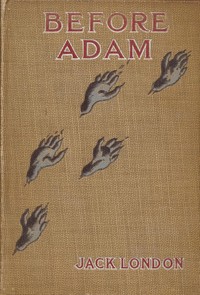
Before Adam — Reading Companion
(0 User reviews)
1141
Project Gutenberg
2008
Not confirmed
Fantasy fiction; Prehistoric peoples -- Fiction; Dreams -- Fiction
Readers of public-domain and historical texts
Project Gutenberg digital edition
en
Edition facts
Words
43,241
Reading time
189 min
Text sections
20
For Before Adam — Reading Companion, the stored edition analysis reports 43,241 words, 3 hr 9 min estimated reading time, and 20 detected text sections.
The text analysis averages about 16.6 words per sentence, while the detected sections provide another way to judge how the source is divided.
Project Gutenberg metadata also associates the work with “Fantasy fiction,” connecting these edition facts with the source record’s subject description.
Source:
Project Gutenberg record #310
Jack London's 1906 novel uses a modern man's ancestral dreams to depict a Mid-Pleistocene world. The narrative contrasts the narrator's waking life with his dream self, Big-Tooth, exploring fear, survival, and early human development through vivid episodes like the invention of a primitive catamaran.
Read the complete public-domain text at its original source.
Read on Project GutenbergJack London's Before Adam opens with a striking claim: the narrator's dreams are not ordinary nightmares but inherited memories from the Mid-Pleistocene. The first chapter immediately establishes a dual perspective—the waking city boy and the dreaming prehistoric self, Big-Tooth—and frames the entire narrative as an attempt to make sense of these 'pictures' that torment his childhood. The voice is urgent and personal, insisting that the fear he experiences is 'the fear of long ago,' a quality alien to modern life. This editorial note examines how the opening, middle, and later excerpts guide a first reading, focusing on the construction of memory, the depiction of early human cognition, and the gradual emergence of social bonds.
The Framing of Memory and Fear
The opening chapter establishes a crucial narrative device: the dreams are presented as a direct inheritance from 'the Younger World.' The narrator insists that his fear is 'of a quality and kind that transcended all my experiences,' immediately distinguishing the dream world from his waking life. This framing invites the reader to treat the subsequent episodes not as fantasy but as a form of ancestral memory. London reinforces this by having the narrator address the reader directly, warning that without explanation, the events would seem 'rhymeless and reasonless.' The effect is to create a sense of authenticity—the narrator is not inventing but recalling. The first excerpt also introduces key figures—Lop-Ear, the Swift One, Red-Eye—as if they are already familiar to the narrator, which encourages the reader to accept them as real beings from a forgotten past.
Learning Through Trial and Error
A middle excerpt details the discovery of paddling and the invention of a primitive catamaran. The passage is notable for its step-by-step depiction of learning: Lop-Ear first paddles by accident, then the narrator joins him, and together they experiment with log size and stability. London emphasizes their limitations—'we did not have sense enough to know it'—highlighting the gap between instinct and reasoned invention. The episode also reveals the characters' vulnerability: they cannot swim, and their fear of Red-Eye is momentarily forgotten in the absorption of play. This section exemplifies how London uses concrete, physical actions to illustrate cognitive development, avoiding abstract commentary. The reader watches the characters learn, rather than being told about their progress.
The Swift One and Emerging Social Bonds
Later in the narrative, the introduction of the Swift One marks a shift from solitary survival to social interaction. The excerpt describes her as 'very mild,' with 'the mildest eyes,' in contrast to the 'viragos' of the Folk. Her timidity and the slow process of acquaintance—first hiding, then making 'soft peace-sounds,' finally joining in play—suggest a nascent capacity for trust and cooperation. London does not sentimentalize this bond; the Swift One remains wary, and the narrator observes her from a distance. The passage also hints at gender roles within the horde, though the excerpts do not develop this fully. For a first-time reader, this section offers a respite from the earlier fear and introduces a character who may become a focal point for emotional attachment, though the incomplete excerpts leave her ultimate role uncertain.
The Limits of the Dream Narrative
Throughout the excerpts, London maintains a careful ambiguity about the nature of the dreams. The narrator never claims to understand them fully, and the reader is left to wonder whether they are genetic memory, reincarnation, or psychological projection. The opening chapter's reference to 'the fear that was rampant in the Younger World' suggests a biological inheritance, but the narrative never resolves this question. Additionally, the excerpts provide only fragments of the larger story: Red-Eye's role is hinted at but not explained, and the fate of the Swift One is unknown. A first reading should therefore approach the text as a series of vivid episodes rather than a linear plot. The strength of the novel lies in its sensory detail—the 'bite of the morning wind,' the 'taste of young bark'—and its willingness to leave gaps for the reader to ponder.
London's Before Adam rewards a reading that attends to its small, concrete observations: how a hand steadies a log, how a soft sound builds trust, how fear shapes perception. The excerpts suggest that the novel is less concerned with a grand narrative than with the texture of a vanished world. Readers may find it useful to track the narrator's emotional shifts—from terror to curiosity to attachment—as a guide through the dream sequence. The incomplete excerpts leave many questions unanswered, but that incompleteness is itself part of the book's design: a memory, after all, is never whole.
Reading about Big-Tooth’s fear of the open water brought me back to afternoons spent with my grandfather’s tales of flight, that same trembling wonder before something vast. I remembered the quiet ache in The Flying Girl — The Flying Girl — Reading Companion — how her imagined sky felt as heavy and lonely as this ancient river. Both books left me holding my breath, unnoticed.
There are no reviews for this eBook.
There are no comments for this eBook.
Reader reflection
How will you remember this book?
Save your reaction, strongest insight, and memorable passage.
Your progress
0
/
10
2
How did the book work for you overall?
3
Would you encourage someone else to read it?
4
What was the reading difficulty like?
5
Would you start a conversation about this book?
6
What was its emotional impact?
7
Did the book meet your expectations?
8
How clearly were the main ideas presented?
9
In one sentence, what did you learn?
10