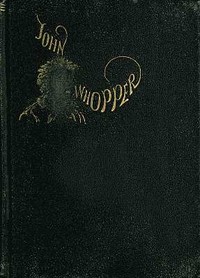
John Whopper The Newsboy — A Reader’s Guide
Edition facts
The catalog record for John Whopper The Newsboy — A Reader’s Guide provides practical reading context through 20,167 words, 1 hr 28 min estimated reading time, and 2 detected text sections.
The text analysis averages about 26.2 words per sentence, while the detected sections provide another way to judge how the source is divided.
Project Gutenberg metadata also associates the work with “Fantasy literature,” connecting these edition facts with the source record’s subject description.
Calculated from edition completeness, EPUB availability, text structure and catalogue metadata. Not a user rating.
How this score is calculated
- Description quality20 pts
- Title & short description10 pts
- Source metadata20 pts
- Text length15 pts
- Chapters / structure15 pts
- EPUB file integrity20 pts
Total of 100 points, scaled to a 2.5-5.0 range. Editions with an empty description or a missing EPUB file are not scored.
Read the Text
HOW JOHN WHOPPER DISCOVERED THE AIR-LINE TO CHINA.
Two years ago last February, I think it was on a Tuesday morning, I started as usual very early to distribute my papers. I had a large bundle to dispose of that day, and thought that if I took a short cut across the fields, instead of following the road from Roxbury to Jamaica Plain, I could go my rounds in much less time. I do not care to tell precisely where it was that I jumped over the fence; but it is a rough, barren kind of spot, which nobody has ever done any thing to improve.
After walking about a third of a mile, I began to think that I had better have kept to the turnpike; for I found that I was obliged to clamber over an uneven, rocky place, among trees and bushes and shrubs, that grew just thick enough to bother me, so that I hardly knew where to put my feet. All at once I lost my balance, and felt that I was sliding down the side of a smooth, steep rock; while underneath, to my horror, I saw what looked like a circular cave, or well, some five or six feet in diameter. I tried to grasp the rock with my hands, and ground my heels as hard as I could against the surface, but it was of no use; down I slipped, faster and faster, until at last I plunged, feet foremost, into the dark hole below. For a moment I held my breath, expecting to be dashed to pieces; and oh, how many things I thought of in that short minute! It seemed as if every thing that I had ever done came back to me, especially all the _bad_ things; and how I wished then that I had lived a better life! I thought, too, of my poor mother and my little brother and sister at home, and how they would wait breakfast for me that morning; and how they would keep on waiting and waiting, hour after hour and day after day; and how the neighbors would all turn out and search for me; and how I should never be found, and nobody would ever know what had become of me. And then I wondered whether Mr. Simpson, who employed me to distribute the papers, would suppose that I had run away somewhere, to sell them on my own account; and so I went on thinking and wondering, until it seemed as if there was no end to the time. And yet I didn't strike the bottom of the cave, but just went on falling and falling, faster and faster, in the darkness, and sometimes just grazing the sides, and still not so as to hurt me much. My great trouble was to breathe; when it occurred to me to lay the sleeve of my coat across my mouth: and then I found that I could breathe through the cloth with tolerable ease. After a while, I recovered my senses; and though I continued to fall on still faster and faster, I experienced no great inconvenience. How long this continued, I cannot tell; it appeared to be an age; and I must have been falling for several hours, when I began to feel as though I was not sinking as fast as I had been; and after a while, it seemed as if I were rising up, rather than tumbling down. As I was now able to breathe much more freely than I had done, I began to think calmly about my condition; and then the thought flashed across my mind, that perhaps I had passed the centre of the earth, and was gradually rising to the surface on the other side. This gave me hope; and when I found that I continued to move slower and slower, I tried to collect my faculties, so that I might know just what it would be best to do, if I should be so fortunate as to reach the other end of the hole into which I had tumbled. At last, looking down, I saw a little speck of light, like a very faint star; and then, I tell you, my heart bounded with joy. At this moment it suddenly occurred to me that it would not do to come out of the hole _feet foremost_; and, by a tremendous effort, I managed to turn a complete summersault,--what the boys always called a _somerset_,--which, of course, brought me into the right position. How thankful I felt that I had been taught to practise gymnastic exercises at the school in Roxbury! In my present attitude I couldn't see the bright spot any longer: but, before long, I perceived that it was growing lighter around me; and I was confident that the time of my release drew near. I had determined exactly what I would do when I reached the surface of the earth again; and, accordingly, on the instant that my head came out of the hole, I grasped the edge with all my might, and, by another terrible effort, swung myself up into the air, and leaped upon the ground.
It is impossible to describe the strange thrill that passed over me when I thus found myself standing on what I knew must be the eastern side of the globe. As soon as I had fairly recovered the use of my reason, I began to speculate as to the region of the country into which I emerged. If I had come directly through the centre of the earth, I knew, of course, just where I ought to be; but this hardly seemed possible, considering how short a time it had required for my journey. It then occurred to me that I was really unable to form any accurate idea of the number of hours that had elapsed since I left the soil of Massachusetts; for, before I had fallen a hundred feet, a whole age appeared to have passed. I knew that it was about six o'clock in the morning when I started; and, on looking at my watch, I found that it had stopped at 6.45, owing, as I afterwards ascertained, to the influence of magnetic currents upon the hair-spring.
The country around was in a high state of cultivation, except in the immediate vicinity of the spot where I stood. This was rough and barren, and so situated that the small cavity in the earth from which I had just been released, would be very likely to escape observation. Thinking that it might be important for me to be able hereafter to identify the locality, I took a careful observation of its general bearings, and twisted together a few of the twigs that grew near the hole, but in such a manner as would not be likely to arrest attention.
Striking off now at random, I soon found myself in a low, marshy region, covered with a species of grain unlike any thing I had ever seen before, but which I concluded must be rice; and then the thought came to me, that very probably I was in China. After walking for an hour or two, I reached a rising ground, and saw in the distance an immense city on the water's edge; which from its position, and resemblance to certain pictures that I had once seen in Boston, I believed to be Canton. Refreshing myself with some fruit that grew by the wayside, I started off in haste, in order, if possible, to reach the city before nightfall. Just as the sun was setting, I entered what appeared to be one of the main streets; when, tired and hungry and footsore, I began to think seriously what I should do to procure food and lodging. Here I was,--a poor boy in a strange land, unable to address a word to the people around me, and with only a few cents and two or three bits of paper currency in my pocket, that could be of no value in that country. _What was I to do?_ Just then I came to a large and respectable-looking building; and over the door there was this sign, in good plain characters:--
"ENGLISH AND AMERICAN COFFEE-HOUSE."
Tears of joy filled my eyes. In an instant, I said to myself, "Your fortune is made, old fellow! Here you have thirty or forty Boston newspapers, not twenty-four hours old, strapped around your neck; and I rather think they will be in some demand in Canton."
With a light heart I now entered the office of the hotel, and threw down my bundle, with a good, black-leather covering around the papers, so that it looked like an ordinary piece of luggage, which gave me the appearance of a regular traveller; then called for a room, and ordered supper. It was true that I had very little money in my possession,--not enough, certainly, to pay my bill at the hotel; but no questions were asked, and I gave myself little concern as to the future. I had a first-rate appetite, and ate voraciously.
After supper was over, I took my bundle in my hand, and strolled leisurely into a pleasant and spacious room, where a number of gentlemen--English and American--were sitting around in groups, some chatting together, and others reading the London and New York and Boston papers. Among them I recognized the face of a merchant whom I had seen several times in State Street; and slinging the strap over my shoulder in a careless, every-day sort of tone, just as any newsboy would have done at home, I went up to him and said, "Have the morning papers, Mister?--'morning papers?'--'Advertiser,' 'Journal,' 'Post,' 'Herald,' last edition,--published this morning, _only five dollars_!" Everybody in the room looked up, for I managed, as newsboys generally do, to speak loud enough to drown every other sound; but no one uttered a word. It was evident that they thought I was crazy, or something worse; and so I just cried out again, "Have the morning paper, sir?" at the same time thrusting a copy of "The Advertiser" into his hand. He looked like an "Advertiser" kind of man,--well dressed and highly respectable.
Involuntarily his eye glanced at the date,--"Tuesday, Feb. 16, 1867"; and then, in an excited, quivering tone, he said, "Let me look at your other papers." There was a long table in the centre of the room, which I approached; and, slowly unfolding my bundle, I laid a few of the papers wide open in front of the gentlemen, who crowded around in the highest state of excitement. Still there was dead silence; when one of them suddenly burst out with the exclamation, "Good heavens! Here is a notice of the arrival of 'The Golconda' at New York, with a full account of the cargo, and every thing else correct. Why, this must be genuine!"
One after another followed with a cry of surprise at some news which they had found; until, in a few minutes, every gentleman in the room was absorbed in reading the papers, appearing to have entirely forgotten all about me, and not caring to ask how it was that I had brought them to China in less than twenty-four hours. After I had stood there whistling carelessly as long as I thought worth while, I spoke up in a loud voice, and said, "Well, gentlemen, you seem to be enjoying the news pretty well. I hope you don't mean to forget to pay for the papers,--_only five dollars a copy_!"
At this speech every one of them looked at me with a strange expression, as if they hardly knew whether I was a real human boy or something else; when the Boston gentleman said, "How on earth did you get these papers here?" To which I answered very carelessly, "I didn't get them here _on_ earth."
"I will tell you what I mean, and answer your questions, after you have paid me _five dollars each; and cheap at that, considering_."
"Indeed it is, for me at least," said one of the gentlemen. "What I have learned from this paper is worth to me, in a business way, thousands of dollars"; and with that he came forward and put a hundred into my hand, in the good, solid form of gold-pieces. His example had its effect upon the others. Instead of the two hundred which I had hoped to receive for my forty newspapers, I was actually in possession of not less than--well, I don't care to tell exactly how much, on account of the income-tax.
"Come, now," said the gentlemen, almost in one breath, "tell us how these papers came to China."
"I brought them myself."
"When did you leave America?"
"The morning when these papers were printed: but how long ago that was, I really don't know, as my watch stopped while I was on my voyage; only I thought it was just as well to call out, as I always used to do at home, 'Morning paper!' although, perhaps, for all I can tell, they may be two or perhaps three days old; anyhow, I guess you find them a good deal fresher than the rest you have got on hand."
Having delivered myself of this somewhat protracted speech, I began moving towards the door with the air of one who had said every thing that could reasonably be expected, in reply to the curious inquiries of my liberal patrons, when the Boston merchant motioned for me to stop, saying with some severity, "Did you not promise that you would inform the company how these papers came from America to China in such an incredibly short period of time, whenever you should have received your pay for the same?"
"Yes, sir; and I just told you that I brought them over--not exactly _over_--but--in short, I brought them here."
"You say, 'not exactly _over_'; do you mean by that phrase to be understood to say that you did not come over land?"
"Your honor has hit my meaning precisely."
"You don't pretend to say that you came by water?"
"How then, _under the heavens_, did you come?"
"I didn't come under the heavens at all."
"I don't believe," said the irritated gentleman, turning to his companions, "that the fellow came at all; he must be lying."
All the answer that he received was the rustling of forty newspapers, bearing the imprint, "February 16, 1867, Boston." There was no getting over this.
After a pause of several minutes, during which a bright idea entered my mind, I came forward into the circle, and said, "Well, gentlemen, I want to see if I can make a good bargain with you; and when that is settled, I will tell you how I came over--I mean, I will tell you how I got here; that is, I will tell you _the route_ that I took. If I can arrange for the delivery in Canton of the New York and Boston daily papers, within thirty-six hours of the time when they are issued in those cities, will you all promise to give me your generous patronage?"
"Of course we will," they cried all together.
"Very well; then I pledge myself to appear again in this place one week from this day, ready to carry out my part of the bargain. And now, in bidding you good-night, allow me to inform you that I came from America to China by the _air-line_."
With this I retired at once to my room, and was soon sleeping soundly.
I knew that I should be watched so closely the next day as to make it impossible for me to escape without detection; and accordingly I got up an hour or two before daylight; and, having laid upon the table in my room an amount of money which I supposed would be considered a fair compensation for my supper and lodging, I tied the sheets together, and lowered myself down into the then silent and deserted street. It was not long before I found myself once more in the open country; and looking carefully for the twisted twigs that I had tied together the afternoon before, I soon discovered the chasm through which I had made my remarkable trip to the eastern hemisphere. Taking the precaution to tie a handkerchief over my mouth in order that I might economize my breath, I summoned all my courage, and leaped into the hole. My experiences were precisely the same as they had been in the previous journey; and in course of a few hours, I found myself standing once more in the familiar outskirts of Roxbury, and gazing tenderly upon the solemn dome of Boston State House. As fast as my legs would take me, I rushed to my poor mother's humble abode, longing to relieve the bitter agony to which I knew she and my brother and sister must have been subjected during my absence. It is not worth while for me to describe at length the scene that ensued when I stood once more in the family circle, with my mother's arms around my neck, and the young folks bellowing with joy. To the frantic inquiries that were showered upon me as to what had happened,--where I had been,--had I had any thing to eat? I coolly replied that I had not had much to eat; and, if they would give me a good, substantial supper, I would endeavor to relieve their minds.
"Supper, indeed!" cried my good mother; "why, it's just after sunrise! You haven't lost your senses, I hope."
"I beg your pardon; but it was about sunrise hours and hours ago, when I--when I"--and here I faltered, not caring just then to let the whole family into my secret.
"When you what?" said my mother, looking very anxious.
"Why, when I left Canton," I now answered, very promptly.
"You don't say that you have been to Canton?" she replied, but without any such show of astonishment as might have been expected.
"Yes, I have, mother. It occurred to me that I could sell my papers to better advantage there than I could about here; and, indeed, I did, as you may see." Whereupon I laid in her good old hand such a sum of money as she had not clasped for many a day.
"Did you get all this money by selling papers in Canton?"
"I did, and a great deal more; which I am going to deposit by and by in the Savings Bank to your credit."
"There must be an awful demand for papers in Canton."
"There is, mother; and they pay such high prices there, that I am thinking of setting up a news establishment in the place."
"And did you _walk_ all the way to Canton day before yesterday, my boy?"
"Then it was day before yesterday morning when I left home? I thought it was longer ago than that."
"Longer ago! Oh, dear, dear! you are not out of your head, my son?"
"My good mother, I am as sound as you are. Only you know that sometimes, when we are very much occupied, the time passes quickly; and I have been quite busy since I left you."
"And did you say that you walked to Canton?"
"No, mother, I didn't walk a step."
"Then you took the Providence cars?"
"Well, mother, it was a kind of a providence car."
[John's statement at once relieved the old lady's mind; but those of our readers who are not intimately acquainted with the geography of Massachusetts, may be somewhat puzzled at this. For the information of foreigners and uneducated people in general, we must mention that there is a thriving village on the Boston and Providence railroad, about ten miles from Roxbury, which rejoices in the name of Canton.
The story opens with a precise, almost mundane detail: John Whopper, a newsboy, decides to cut across a field near Roxbury to save time delivering papers. This practical choice triggers a fall into a circular cave, and the narrative immediately shifts into a sustained, breathless account of descent. The author, Thomas March Clark, anchors the fantastical in the concrete—the rocky terrain, the bundle of papers, the worry about Mr. Simpson—before plunging into the unknown.
The structure of the opening mirrors a controlled panic: John lists his thoughts as he falls, from regrets about his life to fears about his family waiting breakfast. This interior monologue, rendered in long, accumulating sentences, establishes a voice that is both earnest and observant. The fall itself becomes a passage into a different mode of storytelling, where physical laws are suspended but the narrator's attention to detail remains intact.
A Descent into Specifics
The first chapter builds its wonder not through abstract description but through a meticulous inventory of sensations. John notes the texture of the rock, the way his coat sleeve helps him breathe, and the precise diameter of the cave—five or six feet. These details ground the extraordinary event in a tactile reality. The narrative voice oscillates between childlike wonder and a methodical, almost scientific curiosity, as when John later measures the earth's rotation by watching two wafers.
This blend of the homely and the cosmic is a recurring structural pattern. Clark uses the newsboy's ordinary concerns—his route, his employer, his mother—as a counterweight to the increasingly bizarre discoveries. The reader is never allowed to forget that the protagonist is a working boy, which makes his later theorizing about the earth's axis feel both audacious and plausible within the story's logic.
The Axis as a Machine
John's central hypothesis—that the earth's axis is a hollow, rotating cylinder—is presented as a logical deduction from his observations. He describes the metal surface as "honey-combed," notes the strong draught, and calculates the earth's rotation to time his experiments. The language here is technical: "compensation balance," "magnetic currents," "one ninety-sixth part." Clark gives John a vocabulary that mimics scientific discourse, even as the premise is pure fantasy.
This section of the narrative moves from passive falling to active investigation. John crawls, swims, and searches for an orifice large enough to enter. The physical effort is emphasized—"nerving my whole system for the terrible effort"—and the risk is real within the story. The moment he leaps into the axis, the expected tornado becomes a floating stillness, a twist that undercuts both John's and the reader's expectations. The structure here rewards attention: what seems like a climax becomes a new puzzle.
Recurring Images of Falling and Floating
Two physical sensations dominate the excerpts: falling and floating. The initial fall is described with a series of accelerating clauses—"down I slipped, faster and faster"—and a catalog of anxious thoughts. Later, when John enters the axis, he experiences a paradoxical stillness: "I felt as though I were floating stationary in the air." This opposition between uncontrolled descent and suspended motion structures the journey.
Clark also returns to the image of the hole or orifice. The cave mouth, the cylinder's opening, and the axis itself are all thresholds that John must cross. Each time, the passage involves a loss of orientation—darkness, the vanishing of the entry point—followed by a recalibration of the senses. The recurring detail of the coat sleeve used as a filter for breathing ties these moments together, a small practical object in a vast, inhuman space.
Voice and the Reader's Patience
John Whopper narrates in a direct, confiding tone, often anticipating the reader's skepticism. At one point he imagines the reader interrupting: "Stop, my boy," and responds with a promise that patience will be rewarded. This technique creates a conversational rhythm, breaking the flow of discovery with a meta-narrative pause. The voice is consistently that of a boy who is both awed and proud of his reasoning.
The excerpts show a careful management of information. John reveals his discoveries gradually, with exclamations like "Eureka!" and self-congratulatory comparisons to Newton and Humboldt. Yet the narrative never loses its grounding in the physical struggle—the search for a three-foot hole, the risk of being dashed against the cylinder. This balance between intellectual triumph and bodily vulnerability gives the story its particular energy, even as the larger plot remains unknown.
Readers should attend to the way Clark uses the newsboy's trade as a framing device: the papers, the route, the employer Mr. Simpson. These details are not merely color but structural anchors that make the fantastic journey feel consequential. The story rewards a patient reading of its descriptive passages, where the logic of the imagined world is built step by step. The incomplete excerpts leave many questions open, but the care with which John observes his surroundings suggests that the answers, if they come, will be earned through attention.
I sometimes recall John Whopper and its patient tumbles through the dark, and it reminds me of another boy, Abner Holden’s bound child, whose true descent was into people’s stubborn hearts. Both found their way by trusting the slow turning of things. Try and Trust; Or, Abner Holden's Bound Boy — A Reader’s Guide holds that same quiet warmth.
David Hill
2 weeks agoHow did this book work for you?
Your answers remain private and are stored only in this browser.
Carter Perez
1 month ago