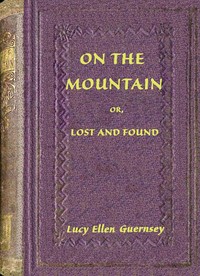
On the mountain — Inside the Classic

(12 User reviews)   1904
Guernsey, Lucy Ellen, 1826-1899 Project Gutenberg 2025 Not confirmed
Christian life -- Juvenile fiction; Conduct of life -- Juvenile fiction; Children -- Conduct of life -- Juvenile fiction; Sunday school literature Readers of public-domain and historical texts
Project Gutenberg digital edition en

Edition facts

Words 47,511
Reading time 207 min
Text sections 5

The catalog record for On the mountain — Inside the Classic provides practical reading context through 47,511 words, 3 hr 27 min estimated reading time, and 5 detected text sections.

The text analysis averages about 14.2 words per sentence, while the detected sections provide another way to judge how the source is divided.

Project Gutenberg metadata also associates the work with “Christian life -- Juvenile fiction,” connecting these edition facts with the source record’s subject description.

Lucy Ellen Guernsey's 1872 novel uses a mountain setting and contrasting child characters to explore moral consequences. The narrative moves between domestic interiors and wooded hillsides, with recurring images of springs, raccoons, and Sunday-school lessons.
Share
Editorial Edition Score 4.7/5

Calculated from edition completeness, EPUB availability, text structure and catalogue metadata. Not a user rating.

How this score is calculated
  • Description quality20 pts
  • Title & short description10 pts
  • Source metadata20 pts
  • Text length15 pts
  • Chapters / structure15 pts
  • EPUB file integrity20 pts

Total of 100 points, scaled to a 2.5-5.0 range. Editions with an empty description or a missing EPUB file are not scored.

Edition quality

Read the Text

"GRANDMA, who was that old lady you were talking with, in the porch after church?"

"I don't know," replied Mrs. Lilly, rather absently, for she was thinking of the sermon she had heard, and had to come a long way back, as it were, to answer Fanny's question. "It was old Mrs. Merrill, I suppose. Oney, we must send her down something this week—some flour and butter and a good piece of pork or a chicken."

"I don't mean 'her'," said Fanny, in a tone of great contempt. "As if I cared for that old beggar woman with her poke bonnet as old as the hills!"

"If you don't care for her, you might," said Mrs. Lilly, in a tone of some displeasure. "Mrs. Merrill never begged in her life, and she is a good Christian woman, though she is old and poor. I desire that you will never let me hear you speak in that way of any old person again."

Fanny flounced in her seat and stuck out her lips, but she was too desirous of having her questions answered to sulk as she sometimes did.

"But I don't mean Mrs. Merrill, grandmother: I know her very well. I mean that old lady with white hair put up in rolls at the sides and a large thin black shawl."

"Oh! That was Mrs. Cassell."

"What! Mrs. Cassell, who lives up in the great house on the hill? Well, I never should have guessed that."

"Why not?" asked Mrs. Lilly.

"Oh, because she was dressed so plainly and she seemed so familiar with everybody. I thought Mrs. Cassell was very rich and aristocratic and all that."

"She 'is' very rich—richer than anybody about here, but I don't know about the aristocracy. She is a very good, kind, charitable woman, and everybody likes and respects her."

"Then I suppose the lady and gentleman with her were Mr. and Mrs. Hugh Brandon?" continued Fanny, paying little attention to her grandmother's remarks. "I don't think he looks so very different from other people, if he has written books."

"How did you expect him to look?" asked Oney, laughing. "Did you expect to see him with wings?"

"They say he is very dissipated," continued Fanny. "They say he drank and gambled so and treated his wife so badly that his mother sent for her home. But she would not come without her husband, so the old lady had to take them both, and now he doesn't do anything but lie about and smoke and chew opium all day long."

"What nonsense!" said Mrs. Lilly, in a tone of great displeasure. "Mr. Brandon is, and always has been, a very studious, industrious, religious young man. I have known him all his life. Who has been telling you such a heap of slanders?"

"I guess I know," said Oney, as Fanny did not answer. "That sounds a good deal like one of Mrs. Leyman's stories. I guess Sarah told you."

"Well, I don't care if she did. Mrs. Leyman heard it from Miss Clark, who does Mrs. Brandon's washing sometimes, and Mrs. Cassell's too; so I guess she knows all about them."

"A good reason for telling stories about them, because she works for them!" said Oney. "Miss Clark had better look at home. Her own character is none too good, for that matter."

"Let me never hear another such word from you, Fanny," said Mrs. Lilly. "I have forbidden you playing with Sarah Leyman before now, and I tell you again not to have anything to do with her. If I find you disobeying me again, I shall punish you."

Fanny looked very angry, but she had learned by this time that her grandmother was not a person to be trifled with, so she relapsed into a sulky silence, and did not open her lips again till they reached home. Then she went up stairs and shut herself into her own room. And when she was called to dinner, she answered that she did not want any. If Fanny had been at home, her mother would have been very much distressed by her refusal to eat. She would have come up stairs and tried to coax her by promising all sorts of good things. And when Fanny had made fuss enough, she would have given up and eaten her dinner with a good appetite. No such thing happened on this occasion.

"You had better come down and get your dinner, I guess," said Oney. "You will be hungry before tea-time."

"I won't," returned Fanny, without turning round from the window. "I wish you would go away and shut the door."

Oney did as she was desired. And no sooner had she gone down stairs than Fanny stole to the head of them to listen.

"She says she doesn't want any dinner," she heard Oney say.

"Oh, very well, we will have ours," answered Mrs. Lilly. "You made a chicken pie, didn't you?"

"Yes, and some raspberry pies and gingerbread. Hadn't I better carry Fanny something?"

"No," replied her grandmother, decidedly; "let her come down if she wants her dinner. However, I will give her another call." And she opened the door so quickly that Fanny had no time to get away.

"You had better come down to your dinner, Fanny," said she. "You know we shall have tea quite late on account of going to the five-o'clock meeting."

"I don't want any dinner," said Fanny, sulkily.

"No, but I don't want any dinner," replied Fanny, thinking that her grandmother was going to give way and coax her, as her mother would have done.

"Very well," said Mrs. Lilly. And she shut the door without another word.

Fanny could hear the rattle of the knives and forks, and the conversation between her grandmother and Oney about the sermon and the Sunday-schools. It was clear that they were not going to send her anything, and that nobody would suffer from her perversity but herself. But still she could not make up her mind to sacrifice her pride and come down stairs. She was very hungry, and very fond both of chicken and raspberry pie, but nobody came to bring her any.

She thought she would try another line of conduct, and she burst out crying and cried as loud as she could. She cried till she was tired, but nobody came near her. For the truth was Mrs. Lilly had grown weary of Fanny's airs, and had made up her mind that the girl must, as she said, be broken in.

Finding that crying did no more good than sulking, Fanny presently stopped. For as she had cried only to get her own way, she could stop whenever she pleased. She went to the head of the stairs and listened. She could hear Oney wiping up the dishes and singing—

"Awake, my soul, to joyful lays!"

And she could hear the gentle "creak, creak," of her grandmother's rocking-chair, in which the old lady was apt to take a nap after dinner. Everything else was quiet about the house, and out of doors too, for that matter, except the chirping of the birds, the soft sighing of the wind, saying "hush, hush," in the two great pine trees behind the house, and now and then a low or bleat from the pastures. She looked out of the window.

"Oh dear, how lonesome it is here!" she said to herself. "If I ever get back to the city again, I shall know when I am well off. There! It is only two o'clock," as the distant sound of the church clock came from the village. "Only two o'clock, and we shall not have tea till seven, I know. We never do on Sunday nights, because grandma and Oney always go to that stupid meeting at the schoolhouse. Oh dear, how hungry I am! I shall starve if I don't have something before tea-time. I mean to go down and ask grandma for something to eat. No, I believe I will ask Oney first."

Fanny went down to the kitchen, where she found everything in order and Oney sitting by the shady window reading her Bible. Oney hardly ever read any book but her Bible on Sunday, because she said she did not have time to read all she wanted of it any other day.

"Oney, I want something to eat," said Fanny, decidedly. "Get me some raspberry pie and gingerbread and a drink of milk directly."

"That isn't the way to ask for it," said Oney, quietly. "Besides, if you want anything to eat, you must ask your grandma."

"Nonsense!" answered Fanny, loftily. "Get me something to eat this minute, Oney, or you will be sorry."

"Maybe so," said Oney. But she did not stir.

Seeing that commanding did no good, Fanny tried coaxing.

"Come, Oney, do give me something to eat, and I will give you a real nice present."

"You must ask your grandma, Fanny," was Oney's only reply.

"What is the matter?" asked Mrs. Lilly, coming into the kitchen. "What are you crying for now, Fanny?" For Fanny was crying again louder than ever.

"I want my dinner!" said Fanny, passionately. "I didn't come here to be starved, and I won't stand it. Give me my dinner, I say!"

"You will not get it in that way," said Mrs. Lilly.

Fanny screamed louder than ever.

"Fanny, stop this minute!" said Mrs. Lilly, taking hold of Fanny's arm in a way quite new to her. "Are you not ashamed of yourself?—A great girl, fourteen years old! Do you think I am going to have my Sunday broken up and the whole house disturbed for you? Stop this minute!"

Fanny obeyed, for she was frightened.

"Now, say 'Please, Oney, get me something to eat.'"

"Please get me something to eat," repeated Fanny, meekly.

"Get her a bowl of bread and milk, Oney," said Mrs. Lilly.

"I don't want bread and milk; I want some pie," sobbed Fanny.

"You cannot have any pie, and if you say any more, you will not have any bread and milk," said her grandmother. "When you have eaten it, go back to your room, and let me hear no more noise. You have made yourself ridiculous enough for one day."

Fanny ate her bread and milk and went back to her room, feeling very crest-fallen indeed. Never in all her short life had she suffered such a "taking down." She had been for twelve years the only child at home. Her father was away at his business from morning till night, and her mother never restrained Fanny in the least.

Mrs. Lilly, the younger, had some new-fashioned theories on the bringing up of children. She thought they should never be punished, for fear of making them slaves, nor restrained from saying all they pleased, lest they should become sly, nor checked in eating, drinking, or play, for fear they should think too much of these things, nor taught anything they did not wish to learn, lest their brains should be overtaxed, or they should take a dislike to learning. She had practiced all these theories on Fanny, and had not found much trouble so long as the child stayed in the nursery.

But when Fanny was twelve years old, she had a little brother born, and by and by a little sister, so that she found herself a person of much less consequence than she had ever been before. The faults which had seemed to her mother of little or no consequence when she was alone were now found very inconvenient and disagreeable. It was not at all pleasant to have Fanny saying before company whatever came into her head, and interrupting and contradicting her elders without scruple, or screaming and throwing herself down on the ground in the public street so that the policeman came to see what the matter was, or running away from school to play about the street and spend in sweet things the money she had taken from her mother's purse. In short, Fanny was found to be a very naughty, troublesome little girl. And when her mother's health failed and it was decided that she must travel in Europe, the nurse told the doctor that there would be no use in Mrs. Lilly's going abroad unless Fanny stayed at home.

"She will keep her mother in a constant worry about her from morning till night, and she will be in mischief from the time she goes away till the time she comes home again. I would not have the charge of her on shipboard for a thousand dollars, and if she is going, I am not. She is more trouble than the babies ten times over."

"I believe you are right," said the doctor, who knew Fanny well. "But what can be done with the child?"

"If her grandmother could take her, it would be the very best thing that would happen to Fanny," said the nurse. "Mrs. Lilly is an excellent, sensible woman. She would be kind to Fanny, and bring her into order if anybody can. I don't blame the child so much as I do some other folks, but she is just as hard to manage as if it were all her own fault."

"I will talk to Mr. Lilly about the matter," said the doctor. "I think you are right, nurse. It will never do for Fanny to go with her mother. And if the old lady is willing, she is just the person to take charge of the child."

There was a terrible scene with Fanny when she found that she was to go to her grandmother's in the country instead of going abroad with her father and mother. But her father was firm, and for once her mother did not interfere. There was no help for it. Go she must, and she comforted herself by thinking that at least she should do as she pleased at her grandmother's, and be a very great lady indeed.

But here, too, she found herself disappointed. Mrs. Lilly was very kind to Fanny and very forbearing with her, remembering how much she had been indulged at home. But she very soon saw that it would be necessary to assert her own authority and make Fanny submit. She was sorry that the contest should come on a Sunday, but there seemed no help for it. And she hoped that Fanny would herself see the folly as well as the naughtiness of her conduct, and try to do better.

Mrs. Lilly was quite an old lady. She lived by herself in the old red farm-house which stood in the very middle of her large farm, with no company but Oney, the Indian woman whom she had brought up from a baby, and a little boy whom she had taken from the poorhouse. The man who helped manage her farm and took a part of it on shares lived in a little house down on the roadside just by the gate of the lane that led to the farm-house. Mrs. Lilly's house was a long, low, red wooden building, and from the door one could see for a long distance, for the farm lay high up on the side of the mountain. The house was very plain and not specially convenient, but it was cool in summer and warm in winter. It had abundance of closets and store-rooms, and from all the windows up stairs and down there was something pleasant to be seen.

When the slate quarry was discovered and leased for so much money, many people thought that Mrs. Lilly would build a new house or come down and live in the village, but the old lady did neither. When her friends asked her about it, she said the old house would last her time; that she had come thither as a bride more than fifty years before and had lived there ever since, and that no other place would seem like home to her. When people talked to her son, he said he should like very much to have his mother live with him (which was quite true), but the old lady had her own fancies, and he thought it best to let her have her own way, which was a very good thing, as she would undoubtedly have had it at any rate. Both Mr. and Mrs. Lilly were very loving and dutiful to their mother, and wrote to her every week. Her son sent her plenty of books and papers, and fine tea and coffee such as he knew she liked, and her daughter made her pretty caps and shawls, and sent her rare green-house plants, and everybody was contented all round.

But Fanny was not satisfied at all in her new home. In the first place, she was really lonely. She missed her school and the bustle of the streets, and she was rather afraid of the solitude and of the great dark mountain which rose so close and steep behind the house. Then, so far from being considered a young lady, she was treated only as a little girl, and made to behave better than she had ever done in her life.

Then, too, her grandmother was surprised and distressed at the child's ignorance. For Fanny, though she had been to a very expensive and fashionable school, was not as far advanced at fourteen as she ought to have been at nine. She could not say the multiplication table, and knew next to nothing of English grammar, though she had begun French and Latin. And when her grandmother told her that the world was round, and showed her by means of a ball of yarn and a knitting needle how it turned on its axis, Fanny was perfectly astonished and could hardly believe it.

"Didn't you learn that in school, Fanny?" asked Oney.

"There was something about it in the geography book," said Fanny, "but I never understood it. I thought the world was shaped just like the map."

Still, Fanny was not unhappy. She liked the fresh air and the green fields, she was very kindly treated, and she found even a certain pleasure in being governed. She might have had a very nice time, if she would have been a good girl and minded her grandmother. But this was just what she could not make up her mind to do.

FANNY went back to her room feeling very much vexed and a good deal ashamed. She did not at all like to be conquered, and she had certainly had very much the worst of it in her contest with her grandmother. She had not only failed in getting her own way, but she had made herself ridiculous. Then, too, she had lost a very good dinner, a circumstance to which she was by no means indifferent.

"How I wish I had just gone down at first!" she thought. "But then who would have supposed she would take one up so? Oh dear, I wish I had never come here. It is all the fault of that hateful old nurse and doctor. I know mamma would have taken me only for them, and I should be having a nice time in London this very day, instead of being poked up in this lonesome place with nobody to play with but Sarah Leyman. And now grandma says I must not go with her. But I don't care, I 'will' play with her. Mamma always let me play with anybody I pleased, and I guess she knows. I am not going to be made a slave of just because my mother is sick—so there!"

"Fanny," called Mrs. Lilly from the foot of the stairs, "do you want to go to the meeting to-night?"

Now Fanny liked very well to go to the meetings in the schoolhouse, though she had called them stupid. The walk was a very pleasant one through the woods and along the banks of the beautiful little river. They were sure to see squirrels and chipmucks and perhaps a wild rabbit, and the lambs in the pastures were so full of their pretty plays that Fanny was never tired watching them. Then the old ladies who came to the meeting took a great deal of notice of her, so that though she did not care for the services, she rather liked to go to the Sunday and Thursday meetings. But to-night she was just in the humour to "quarrel with her bread and butter," as Oney said. So when her grandmother asked her, she answered shortly that she did not want to go.

"You will be left alone in the house," said her grandmother.

"I would just as soon be alone as not," returned Fanny.

The story opens with a pointed contrast between two girls: Fanny, who dismisses an elderly woman as a beggar, and Annie, a city child who insists on watching a tame raccoon eat. Their interaction, set against a hillside spring, establishes a pattern of movement between indoor conversation and outdoor exploration. Guernsey uses the mountain not as a backdrop but as a space where social rules loosen and moral choices become visible.

Hillside and Parlor

The narrative shifts repeatedly between the Cassell family's parlor and the wooded slopes above their home. In the opening chapter, Fanny leads Annie to a spring—a place she calls "the prettiest place you ever saw"—while adults remain inside discussing charity. This spatial division mirrors a thematic one: the children's actions on the hill carry consequences that the adults later address indoors. Guernsey rarely lingers in one setting; a scene that begins with a sermon's aftermath quickly moves to a porch, then to a bedroom, then outdoors. The effect is a restless, episodic rhythm that keeps the reader attentive to who is where and why.

The Raccoon as a Test

Willy's tame raccoon, Cooney, appears only briefly but serves as a small moral test. Annie wants to watch it eat; Fanny tries to pull her away. The animal's presence forces a choice between curiosity and obedience, and Annie's insistence on staying reveals her independent will. Guernsey does not moralize directly—she lets the raccoon's "cunning" behavior and the children's reactions speak for themselves. Later, the raccoon is forgotten, but the pattern of testing through animals or objects recurs: a doll, a piece of cake, a poke bonnet. Each item carries a weight that the characters themselves may not fully articulate.

Voices and Silences

Dialogue in the excerpts is marked by sharp contrasts in tone. Fanny speaks in commands and dismissals: "you may just go away." Annie responds with polite questions. Adults, especially Mrs. Lilly and Mrs. Cassell, use measured, instructive speech—"I desire that you will never let me hear you speak in that way." Yet Guernsey also includes moments of silence: Mrs. Lilly thinking of the sermon, Fanny sulking without words, Annie content to look out a window. These quiet beats create space for the reader to infer motives and judgments that the text does not state outright. The narrative voice itself remains restrained, reporting actions and dialogue without overt commentary.

Lost and Found as Structure

The subtitle "Lost and Found" and the chapter titles—"The Lost Child," "The Search," "Repentance on the Mountain"—suggest a plot organized around disappearance and recovery. The excerpts do not reveal who is lost or how, but they establish a world where children wander into the woods and adults worry. The mountain is both a literal place and a figure for moral peril: Fanny's selfishness, Annie's inexperience, and the adults' oversight all converge on the hillside. Guernsey's structure, moving from domestic order to outdoor risk and back, prepares the reader for a story in which physical and spiritual lostness are intertwined.

Readers attentive to setting and gesture will find Guernsey's moral landscape mapped in small details: a shawl's fabric, a raccoon's cage, the distance from porch to spring. The novel rewards those who watch where characters stand and how they move between rooms and hillsides.

I kept thinking about how On the Mountain lingers in quiet moments—springs, raccoons, Sunday-school echoes—the way consequences settle slowly, like dusk. That same unhurried weight follows in Under Drake's Flag: A Tale of the Spanish Main — Story, Setting & Ideas, though the scenery shifts to salt and sailcloth. Both feel less like adventures and more like remembering what a choice costs, long after the hillside or horizon goes still.

Oliver Martin
4 weeks ago

Daniel Davis
2 weeks ago

Camila Jones
1 week ago

Madison Moore
3 weeks ago

Owen Baker
2 weeks ago

4.5
4.5 out of 5 (12 User reviews )

Add a Review

Your Rating *
  • ...
    Jennifer Vega - 3 weeks ago
    On The Mountain is a beautifully written novel that captures the majesty and solitude of mountain life. The protagonist's journey of self-discovery is both poignant and uplifting. The author's prose is lyrical, painting vivid pictures of the natural world. The story is simple yet profound, and it left me feeling inspired. A must-read for anyone who loves nature, introspection, and character-driven narratives.

  • ...
    Kimberly Berger - 2 weeks ago
    On The Mountain promised an escape into nature but delivered a tedious, meandering tale. The prose is overly flowery, and the plot is almost nonexistent. The characters are flat, and their motivations are unclear. I found myself skipping paragraphs just to get to some action, but there was none. Definitely not for me, and I can't recommend it to anyone who likes a bit of story with their scenery.

  • ...
    Vanessa Dawson - 1 week ago
    On The Mountain is a pleasant read with some lovely descriptive passages about the wilderness. The protagonist's internal journey is relatable, but sometimes the pacing is too slow, and the plot could have been more engaging. Still, if you enjoy quiet, reflective stories, this might be worth a look.


Reader reflection

What did you think of this book?

Answer a few questions and save a private reflection on this device.

Your progress 0 / 10
1

Which reading stage best describes you?

2

Did this book hold your interest?

3

How likely are you to recommend this book?

4

How much effort did this book require?

Related eBooks