1

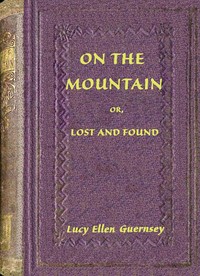
On the mountain — Inside the Classic
(0 User reviews)
2062
Project Gutenberg
2025
Not confirmed
Christian life -- Juvenile fiction; Conduct of life -- Juvenile fiction; Children -- Conduct of life -- Juvenile fiction; Sunday school literature
Readers of public-domain and historical texts
Project Gutenberg digital edition
en
Edition facts
Words
47,511
Reading time
207 min
Text sections
5
The catalog record for On the mountain — Inside the Classic provides practical reading context through 47,511 words, 3 hr 27 min estimated reading time, and 5 detected text sections.
The text analysis averages about 14.2 words per sentence, while the detected sections provide another way to judge how the source is divided.
Project Gutenberg metadata also associates the work with “Christian life -- Juvenile fiction,” connecting these edition facts with the source record’s subject description.
Source:
Project Gutenberg record #76760
Lucy Ellen Guernsey's 1872 novel uses a mountain setting and contrasting child characters to explore moral consequences. The narrative moves between domestic interiors and wooded hillsides, with recurring images of springs, raccoons, and Sunday-school lessons.
Read the complete public-domain text at its original source.
Read on Project GutenbergThe story opens with a pointed contrast between two girls: Fanny, who dismisses an elderly woman as a beggar, and Annie, a city child who insists on watching a tame raccoon eat. Their interaction, set against a hillside spring, establishes a pattern of movement between indoor conversation and outdoor exploration. Guernsey uses the mountain not as a backdrop but as a space where social rules loosen and moral choices become visible.
Hillside and Parlor
The narrative shifts repeatedly between the Cassell family's parlor and the wooded slopes above their home. In the opening chapter, Fanny leads Annie to a spring—a place she calls "the prettiest place you ever saw"—while adults remain inside discussing charity. This spatial division mirrors a thematic one: the children's actions on the hill carry consequences that the adults later address indoors. Guernsey rarely lingers in one setting; a scene that begins with a sermon's aftermath quickly moves to a porch, then to a bedroom, then outdoors. The effect is a restless, episodic rhythm that keeps the reader attentive to who is where and why.
The Raccoon as a Test
Willy's tame raccoon, Cooney, appears only briefly but serves as a small moral test. Annie wants to watch it eat; Fanny tries to pull her away. The animal's presence forces a choice between curiosity and obedience, and Annie's insistence on staying reveals her independent will. Guernsey does not moralize directly—she lets the raccoon's "cunning" behavior and the children's reactions speak for themselves. Later, the raccoon is forgotten, but the pattern of testing through animals or objects recurs: a doll, a piece of cake, a poke bonnet. Each item carries a weight that the characters themselves may not fully articulate.
Voices and Silences
Dialogue in the excerpts is marked by sharp contrasts in tone. Fanny speaks in commands and dismissals: "you may just go away." Annie responds with polite questions. Adults, especially Mrs. Lilly and Mrs. Cassell, use measured, instructive speech—"I desire that you will never let me hear you speak in that way." Yet Guernsey also includes moments of silence: Mrs. Lilly thinking of the sermon, Fanny sulking without words, Annie content to look out a window. These quiet beats create space for the reader to infer motives and judgments that the text does not state outright. The narrative voice itself remains restrained, reporting actions and dialogue without overt commentary.
Lost and Found as Structure
The subtitle "Lost and Found" and the chapter titles—"The Lost Child," "The Search," "Repentance on the Mountain"—suggest a plot organized around disappearance and recovery. The excerpts do not reveal who is lost or how, but they establish a world where children wander into the woods and adults worry. The mountain is both a literal place and a figure for moral peril: Fanny's selfishness, Annie's inexperience, and the adults' oversight all converge on the hillside. Guernsey's structure, moving from domestic order to outdoor risk and back, prepares the reader for a story in which physical and spiritual lostness are intertwined.
Readers attentive to setting and gesture will find Guernsey's moral landscape mapped in small details: a shawl's fabric, a raccoon's cage, the distance from porch to spring. The novel rewards those who watch where characters stand and how they move between rooms and hillsides.
I kept thinking about how On the Mountain lingers in quiet moments—springs, raccoons, Sunday-school echoes—the way consequences settle slowly, like dusk. That same unhurried weight follows in Under Drake's Flag: A Tale of the Spanish Main — Story, Setting & Ideas, though the scenery shifts to salt and sailcloth. Both feel less like adventures and more like remembering what a choice costs, long after the hillside or horizon goes still.
There are no reviews for this eBook.
There are no comments for this eBook.
Reader reflection
What did you think of this book?
Answer a few questions and save a private reflection on this device.
Your progress
0
/
10
2
Did this book hold your interest?
3
How likely are you to recommend this book?
4
How much effort did this book require?
5
How would you describe its reading pace?
6
Which element worked best for you?
7
How clear did the writing feel?
8
Would this book work well in a reading group?
9
Which lesson or insight stayed with you?
10