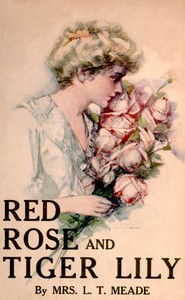
Red Rose and Tiger Lily; Or, In a Wider World — Reading Companion
Edition facts
For Red Rose and Tiger Lily; Or, In a Wider World — Reading Companion, the stored edition analysis reports 83,273 words, 6 hr 3 min estimated reading time, and 9 detected text sections.
The text analysis averages about 14.7 words per sentence, while the detected sections provide another way to judge how the source is divided.
Project Gutenberg metadata also associates the work with “Conduct of life -- Juvenile fiction,” connecting these edition facts with the source record’s subject description.
Calculated from edition completeness, EPUB availability, text structure and catalogue metadata. Not a user rating.
How this score is calculated
- Description quality20 pts
- Title & short description10 pts
- Source metadata20 pts
- Text length15 pts
- Chapters / structure15 pts
- EPUB file integrity20 pts
Total of 100 points, scaled to a 2.5-5.0 range. Editions with an empty description or a missing EPUB file are not scored.
Read the Text
It was a perfect summer's evening. The sun had just set, and purple, gold, violet, rose colour still filled the sky in the west. There was a tender new moon, looking like a silver bow, also to be seen; before long the evening star would be visible.
Hester Thornton stepped out of the drawing-room at the Grange, and, walking a little way down the broad gravel sweep, began to listen intently. Hester was about seventeen--a slender girl for her age. Her eyes were dark, her eyebrows somewhat strongly marked, her abundant hair, of a much lighter shade of brown, was coiled in close folds round her well-shaped head. Her lips were slightly compressed, her chin showed determination. Hester had not been beautiful as a child, and she was not beautiful as a girl, but her face was pleasant to look at, very bright when animated, very steadfast and sweet when in repose. The air was like nectar to her cheeks. She was naturally a pale girl, but a faint rose colour was now discernible in her complexion, and the look of expectation in her dark eyes made them charming.
A step was heard on the gravel behind, and she turned quickly.
"Is that you, father?" she exclaimed.
"Yes. Are not you very imprudent to come out at this hour in your thin house shoes, and with nothing on your head? There is a very heavy dew falling."
"Oh, I never take cold," replied Hester with a smile, which showed her even and pretty white teeth; "and I certainly shan't to-night," she continued, "for I am feeling far too excited."
Sir John Thornton was considered by most of his acquaintances (he could boast of scarcely any friends) as a reserved and almost repellent person, but now, as his eyes rested on his young daughter, something seemed to soften their expression; he took her slight hand and drew it affectionately through his arm.
"It takes a small thing to excite you, my love," he said; "but you always were of a turbulent disposition--just your poor mother over again."
Hester sighed faintly when Sir John spoke of his wife, then she quickly cheered up and said in an eager voice--
"You don't call it a little thing, father, to know that in a minute or two I shall welcome Nan back from school? Nan comes to-night--Annie Forest to-morrow. It would be difficult for any girl to want more to make her perfectly happy."
Sir John raised his brows.
"I only know Miss Forest by hearsay," he said, "so I will reserve my judgment upon her; but I do know Nan. She will upset the entire _regime_ of the house. I like order, and she likes disorder. I like quiet meals, she likes uproarious ones. I hate shocks and she adores them. I am glad, of course, to welcome the child home, but at the same time I dread her arrival. I cannot possibly understand how it is that Mrs. Willis, who is supposed to be such a splendid instructor of youth, should not have brought Nan a little better into control. Now, you, my dear Hetty, are very different. You have passions and feelings--no one has them more strongly--but you keep them in check. Your reticence and your reserve please me much. In short, Hester, no father could have a more admirable daughter to live with him. I am pleased with you, my dear; the experiment of having you home from school to look after my house has turned out well. There is nothing I would not do to please you, and while your friend Miss Forest is here, I will do my best to render her visit a success. The only discordant element will be Nan. I cannot understand why Mrs. Willis has not got Nan into the same control she had you in."
"You forget," said Hester, "that I am seventeen and Nan only eight. No one ever yet could say 'No' to Nan. Father, don't you hear the carriage wheels? She is coming--I know she is coming. Please forgive me, I must run to meet her."
Sir John released his daughter's hand, and Hester flew with the speed of an arrow from a bow up the long avenue. She was not mistaken. Her keen ears had detected the smooth roll of wheels. A landau drawn by a pair of horses had even now entered the lodge gates. Hester, looking up, heard some gay voices, some childish laughter. Then an imperious voice shouted to the coachman to pull up the horses and Nan Thornton and another girl sprang out of the carriage and ran to Hester's side.
Confused utterances, sundry embraces, the quick intermingling of ejaculations, kisses, commands, explanatory remarks--all rose on the sweet night air.
"Hetty, you look quite grown up. Please, Jenkins, you can drive on to the house. I'm not getting in again. Aren't you glad to see me, Het? I have come back a greater tease and torment than ever."
"Yes, Nan, delighted--more than delighted. Oh! you sweet, how nice it is to feel you kissing me! Why, Annie, how did you happen to come to-night? I didn't expect you until to-morrow. I was wondering how I could endure the next twenty-four hours of expectation, even with Nan to keep me company, and now you are here. Oh, how very, very glad I am."
"Kiss me, Hester," said Annie. "Nan and I concocted this little plan. We thought we'd take you by surprise. Oh dear, oh dear, I feel so wild and excited that I'm sure I shall be just as troublesome as I used to be before you tamed me down at school. Now then, Nan, you are not to have all the kisses. Hester, dear, how sweet and gracious and prim and lady-of-the-manorish you do look!"
"I don't care what I look like, I only know what I feel," replied Hester: "about the happiest girl in England. But don't let us stand here talking any longer, or father will take it into his head that I am catching cold in the night air. Here, Nan, take my arm. Annie, my other side is at your disposal. Now, do let us come to the house."
The girls began to move slowly down the long winding avenue. Nan had the pretty, soft dark eyes which used to characterise her as a little child. Her abundant fluffy golden hair hung below her waist. Her baby lips and sweet little face looked as charming as of old. She was a very pretty child, and promised to be a beautiful woman by-and-by. Her beauty, however, was nothing at all beside the radiant sort of loveliness which Annie Forest possessed. She was a creature all moods, all expression, all life, all movement. She had early given promise of remarkable beauty, and this had been more than fulfilled. Hester glanced at her now and again in the most loving admiration.
"It is good to have you back, Nan," she said, "and it is delightful to know that you have come at last to pay your long, long promised visit," she continued, looking at Annie. "Well, here we are at home. Nan, you must go up and show yourself to nurse this minute. Annie, let me take you to your room."
"Dear old nursey," said Nan; she rushed up the stairs, shouting her old nurse's name as she went; her quick footsteps flew down the long corridor, she pushed open the baize door which separated the nurseries from the rest of the house, and in a moment found herself in the old room.
Nan's nurse was a cherry-cheeked old woman of between sixty and seventy years of age.
"Eh, my darling, and how did you get back without me hearing the sound of the carriage wheels!" she exclaimed. "Eh dear, eh dear, I meant to be down on the front steps to greet you, Miss Nan. Eh, but you look bonny, and let me examine your hair, dear--I hope they cut the points regular. If they don't, it will break away and not keep even."
"Oh, don't bother about my hair now," said Nan. "What does hair signify when a child has just got home, and when she wants a kiss more than anything else in the world? Now, nursey, sit down in that low armchair and let us have a real hug. _That's_ better; and how are you? You look as jolly as ever."
"So I am, my pet; I'm as happy as the day is long since Miss Hetty has come home and took the housekeeping over. I was in a mortal fret before, with her at school and you at school, but now I think the danger is past."
"What danger?" asked Nan; "you always were a dear old croak, you know, nurse."
"Yes, pet, perhaps so; but I didn't fret without reason, you may be quite sure of that."
"Well, what were you afraid of? You know I'm an awfully curious girl, so you must tell me."
"It's a sin to be too curious, Miss Nan--it leads people into untold mischief. Curiosity was the sin of Eve, and it's best to nip it in the bud while you're young. Now let me brush out your hair, my darling, and get you ready for supper."
"Yes, in a minute," said Nan. She pushed back the shady hat in which she had traveled, and seated herself afresh on her nurse's knee.
"How do my kisses feel?" she asked, breathing a very soft one on each of the old woman's cheeks.
"Eh, dear," said the nurse, "they're like fresh cream and strawberries."
"Well, you shall have six more if you tell me what your fears were."
Nurse looked admiringly back at Nan.
"You're just the audacious, contrary, troublesome bit of a thing you always were," she said; "but somehow I can't resist you. There's no fear now of anything happening, so you needn't be in a taking; but what did put me out was this: I thought your father, Sir John, might be bringing a new mistress here."
"What! a new mistress?--A housekeeper, do you mean?" Nan's brown eyes were open at their widest.
"No, dearie, no, a wife--someone to take the head of the house. Men like Sir John must have their comforts, and a house without a mistress isn't as it ought to be. But there, Miss Hetty is here now, and that makes everything right."
"But a new mistress," repeated Nan--"a new wife for father. Why, she--she'd be a _stepmother_. Oh, how I'd hate her."
"Well, darling, there's not going to be any such person; it was only an idle fear of your poor old nurse's that will never come to anything. Forget that I said it to you, Miss Nan. Oh, my word! and there's the gong, so supper is ready, and Sir John won't like to be kept waiting. Let me brush out your hair, I won't be a minute. Now, there's my pretty. It's good to have you back again, Miss Nancy. Only I misdoubt me that you'll turn the house topsy-turvey, as you always and ever did."
While nurse was speaking, she was deftly and quickly changing Nan's travel-stained frock for a white one, and was tying a coral pink sash round her waist.
"Now you're ready," she said, giving the little figure a final pat.
Nan shook out her golden mane and went demurely downstairs--more demurely than was her wont. The dawning of possible trouble filled her sweet eyes. A new wife--a possible stepmother! Oh, no, by no possibility could such a horror be coming; nevertheless, her full cup of happiness was vaguely troubled by the thought.
Sir John Thornton could be a very pleasant host. He was a reserved man with a really cold nature. He disliked fuss and what he called "ebullitions of affection;" he hated kissing and fondling. He liked to treat even his nearest and dearest with ceremony, but he was a perfect host--the little attentions, the small politenesses which the _role_ of host requires, suited his character exactly. Hester and Nan, his only children, were his opposites in every respect. It is true that Hester inherited some of his pride, and a good deal of his reserve, but the fire underneath her calm, the passionate love which she could give so warmly to her chosen friends, she inherited from her mother, not from her father. Nan had never yet shown reserve to anyone. As far as any creature could be said to be without false pride, Nan was that individual--she was also absolutely devoid of fear. She believed that all the world loved her. Why not? She was perfectly willing to love all the world back again. If it chose to hate her, she could and would hate it in return with interest; but, then, why should it? The world was a good place to Nan Thornton up to the present.
Now, Sir John dreaded his impulsive younger daughter more than words can say. Perhaps somewhere in his heart he had a certain fatherly admiration for her, but if so it did not show itself in the usual fatherly way. Annie Forest was at the present moment absorbing his attention.
Annie was between sixteen and seventeen years of age; she was still, of course, quite a child in Sir John's eyes, but she was undoubtedly very pretty--she had winning ways and bright glances. Her little speeches were full of wit and repartee, and she was naturally so full of tact that she knew when a word would hurt, and therefore seldom said it.
When Nan entered the room in which a hasty supper had been prepared for the hungry travellers, she found her father and Annie talking pleasantly to one another at one end of the table, while Hester presided over the tea equipage at the other.
"Here you are, little whirlwind," said Sir John, slipping his arm round his younger daughter's waist and drawing her for a moment to his side.
Nan looked at him soberly. She gazed into his eyes and examined the curves of his lips, and noted with satisfaction the wrinkles on his brow, the crows' feet at the corner of each eye, and some strong lines which betokened the advance of years in the lower part of his face.
"You're too old," she said, in a contemplative voice. "I'm so glad--you're much too old."
She stroked his deepest wrinkle affectionately as she spoke.
Now Sir John hated being considered old, and an angry wave of colour mounted to his forehead.
"As usual, you are a most impolite little girl," he said. "I do not trouble myself to inquire what your sage remark means, nor why you rejoice in the fact of my possessing the infirmities of years; but I wish to repeat to you a proverb which I hope you will bear in mind, at least, when in _my_ presence during the holidays, 'Little girls should be seen and not heard.' Now go to your seat."
Sir John released his hold of Nan's broad waist and turned to Annie.
"Yes, a good deal of the country is flat," he said, "but we have some pretty drives. Are you fond of riding?"
"I should be if I had a chance," replied Annie; "but the fact is, I never was on horseback since I was five years old, so I cannot be said to know much about it."
"I am sure you could quickly learn," said Sir John. "Hester has a very quiet pony which she can lend you while you are here. By the way, Hester, Squire Lorrimer called to-day. I said you would go to the Towers to-morrow morning--you can take Miss Forest with you. The Lorrimers are a very lively household, and it will amuse her to know them."
"I should think they are lively," burst from Nan at the far end of the table. "How is Kitty Lorrimer, and how is Boris? And have they got as many pets as ever? Oh, _can_ you tell me, please, father, if the dormouse has awakened yet? It was fast asleep when I was home at Christmas, and Boris said it mightn't wake again until May. Boris was so sorry it wasn't quite dead, because he wanted to stuff it; but he couldn't if it was alive, could he? That would be cruel, wouldn't it? Father, can you tell me if the dormouse is awake?"
Sir John fixed a cold eye upon Nan.
"I am unacquainted with the state of the dormouse's health," he said--"disgusting little beasts," he added, turning for sympathy to Annie, whose bright dark eyes danced with fun as she watched him.
"They're not disgusting; they're perfectly heavenly little darlings," came from Nan in an indignant voice. "Oh, and what about the white rats? Boris had four in a box when I went last to the Towers, and Kitty had one all to herself, and Boris and Kitty were always fighting as to which were the most beautiful--the one rat or the four. Did you ever see a white rat, Annie? They _are_ pets, with long tails like worms."
"Hester," exclaimed Sir John, "will you induce Nan to hold her tongue and eat her supper in peace?"
Hester bent forward and whispered something to Nan, who shrugged her shoulders indignantly. Her face grew crimson.
"I can't learn that proverb," she said, after a pause. "I can't obey it, its no use trying. Father, do you hear? I can't be one of those seen-and-not-heard girls. Do you hear me, father?"
"I do, Nan. If we have finished supper, shall we go into the drawing-room?" he added, turning to Annie.
Nan lingered behind. She slipped her hand through her sister's arm and dragged her on to the terrace.
"I feel so wicked that I think I'll burst," she exclaimed. "Why is father always throwing a damp cloth over me?"
"Nan, dear, you irritate him a good deal. Why do you talk in that silly way when you know he cannot bear it?"
"Because I'm Nan," answered the child, pouting her lips.
"But Nan can learn wisdom," said Hester, in her sweet elder-sisterly tone. "Even though you are the liveliest, merriest, dearest little girl in the world, and though it is delicious to have you back"--here there came an ecstatic hug--"you need not say things that you know will hurt. For instance, you are perfectly well aware that father does not like his age commented on."
"Oh, _that_," said Nan, some of the trouble which nurse's words had caused coming back to her eyes. "Oh, but I really said what I _meant_, then--it was not mischief. I was so glad to see that he is old. I love those wrinkles of his--I adore them."
"What can you mean, you queer little thing?"
"Why, you see, Hetty, he won't be attractive, and there'll be no fear."
"Nurse said that perhaps he'd be having a wife, and giving us a stepmother."
"Oh, what nonsense!" said Hester, in a vexed tone. "What a silly thing for nurse to say. I am quite surprised at her. As far as I can tell our father has no intention of marrying again; but if he did?"
"If he did," repeated Nancy, "nurse says that you wouldn't be mistress of the Grange any longer."
A wistful sort of look, half of pain, half of suppressed longing, filled Hester's dark eyes for a moment.
"I might go out into the world," she said, "and have my heart's desire."
"But aren't you happy here?"
"Yes, oh yes! I am talking nonsense. My duty lies here, at least at present. Mrs. Willis has taught me always to put duty first. Now, Nan, let us forget what is not likely to happen. It is nearly time for you to go to bed; you look quite tired; there are black rings under your eyes; but first, just tell me about Mrs. Willis and the dear old school."
"Mrs. Willis is well," said Nan, with a yawn, "and the school is in _statu quo_. I am in the middle school now, and perhaps I shall get a drawing-room to myself before long. I'm not sure though, for I never can be tidy."
"I wish you could be; it's a pity not to curb one's faults."
"Oh, bother faults. I don't want you to lecture me, Hetty."
"No, darling, I don't wish to; but I thought you were so fond of Mrs. Willis. I thought you would do anything to please her."
The novel begins on a summer evening with Hester Thornton stepping outside to listen intently. Her father, Sir John, warns her about the dew, but she is too excited to care. Hester is described as not beautiful but pleasant, with dark eyes and a determined chin. The scene establishes a quiet, observant tone, focusing on Hester's character through small details like her house shoes and her father's reserved manner.
Soon after, the narrative shifts to a masquerade at the Towers, where Annie Forest appears disguised as a gipsy, startling nurse Martin. The ballroom fills with fairies and brownies, and the Lorrimer children—Molly, Boris, and Nell—are among them. The absence of the Squire and Mrs. Lorrimer is noted, hinting at underlying troubles.
A Quiet Evening and a Masquerade
The opening chapter, “Nan’s Golden Mane,” introduces Hester Thornton on a perfect summer evening. The sky is described in rich colors: purple, gold, violet, rose. Hester is about seventeen, with dark eyes and abundant brown hair. Her father, Sir John, is reserved and has few friends. The dialogue reveals Hester’s excitement about something unspecified, and her father’s concern about her health. The scene is calm, with a tender new moon and evening star.
In contrast, the later excerpt from the fancy ball shows a lively masquerade. Annie Forest, dressed as a gipsy, teases nurse Martin. The ballroom is filled with fairies and brownies, and the band plays a waltz. The Lorrimer children—Molly as a shepherdess, Boris as a brownie, and Nell as a fairy—are present. Their parents are absent, in London on business. The narrator notes that “grim ancestors” look down from tarnished frames, suggesting a contrast between past and present.
Character Contrasts: Hester and Annie
Hester Thornton is portrayed as sensible and composed. She wears thin house shoes and no hat, but claims she never takes cold. Her father’s worry highlights her determination. The description of her face—pleasant, bright when animated, steadfast in repose—suggests a steady nature.
Annie Forest, by contrast, is mischievous and theatrical. She disguises herself as a gipsy, speaks with “bitter emphasis,” and leads nurse Martin through the ballroom. Her laughter is choked, and she calls herself “eminently respectable” ironically. The two characters seem set up as foils: Hester’s quiet resolve versus Annie’s playful defiance. The excerpts do not reveal their relationship, but their contrasting introductions frame potential conflicts.
Setting and Atmosphere: The Grange and the Towers
The Grange is introduced as a place of quiet domesticity. The gravel sweep, drawing-room, and heavy dew create a serene, slightly formal atmosphere. Sir John’s reserved nature and Hester’s excitement suggest a household with undercurrents.
The Towers, in contrast, is a site of extravagant festivity. The ball-room is old, with tarnished frames of ancestors. The fairies and brownies dance vigorously, and the scene is described as “frivolous and yet enchanting.” The absence of the Squire and Mrs. Lorrimer, mentioned in whispers, adds a note of unease. The setting thus shifts from intimate to public, from calm to chaotic, mirroring the characters’ different worlds.
Family Dynamics and Hints of Trouble
In the opening, Hester’s relationship with her father is central. Sir John is protective but distant; Hester is excited but secretive. The dialogue suggests a bond, but also a lack of full communication.
At the Towers, the Lorrimer children are present without their parents. Molly explains that her mother is in London on “special business” and her father is with her. The friends and well-wishers “augured happy results from this present gaiety,” implying rumors of trouble. The contrast between the children’s carefree dancing and the absent parents creates a sense of impending change. The excerpts do not reveal the nature of the trouble, but the pattern of parental absence and children’s independence is established early.
These excerpts offer a glimpse into a story that balances domestic scenes with lively set pieces. The contrast between Hester’s quiet evening and the Lorrimers’ masquerade suggests a world where different families face different challenges. Readers may watch for how the characters’ initial traits—Hester’s composure, Annie’s mischief, the Lorrimers’ gaiety—develop as the narrative unfolds. The absence of parents in both settings hints at themes of independence and responsibility.
There’s something about Hester’s careful composure that makes me think of another quiet heroine, one who finds herself unexpectedly small in a vast world. I remember the same wistfulness drifting through Bee: The Princess of the Dwarfs — Context and Discussion, that feeling of watching a familiar life from a sudden distance. Both stories carry that ache of unspoken things, don’t they?
Joseph King
1 month ago-
Amy Brown - 1 month ago
An exquisite work that transports you into a world of wonder and self-discovery. The characters, particularly Lilias and her 'tiger lily' counterpart, are richly drawn and evolve beautifully against a backdrop of travel and culture. The author's prose is lyrical and evocative, painting vivid scenes that linger long after the final page. A truly enlightening read that expands both heart and mind. -
Stephanie Irwin - 3 weeks ago
Despite the beautiful title, the story fails to deliver a compelling narrative. The characters are too idealized and lack depth, making their growth feel artificial. The plot meanders without a clear direction, and the cultural insights seem superficial. The prose is dense and overwrought, which may frustrate readers seeking a more straightforward tale. A missed opportunity to explore its promising premise. -
Gregg Estrada - 1 week ago
A well-written story with strong thematic undertones about personal growth and understanding different cultures. The descriptions are lovely, but sometimes they overshadow the plot's development. The dual perspectives are engaging, but the transitions can be abrupt. Overall, a thoughtful read for those who appreciate character-driven narratives and are willing to overlook occasional pacing issues.
How will you remember this book?
Save your reaction, strongest insight, and memorable passage.
Amelia Nguyen
2 weeks ago