The thin match — Story, Setting & Ideas

(0 User reviews)   145
Whitehead, Henry S. (Henry St. Clair), 1882-1932 Project Gutenberg 2024 Not confirmed
Short stories; Matches -- Fiction; Anthropomorphism in literature Readers of public-domain and historical texts
Project Gutenberg digital edition en

Edition facts

Words 5,985
Reading time 27 min
Text sections 1

The source record for The thin match — Story, Setting & Ideas measures this digital text at 5,985 words, 27 min estimated reading time, and 1 detected text section.

The text analysis averages about 21.3 words per sentence, while the detected sections provide another way to judge how the source is divided.

Project Gutenberg metadata also associates the work with “Short stories,” connecting these edition facts with the source record’s subject description.

Henry S. Whitehead's 1925 story follows a match born with a brown streak and a crooked head, who endures rejection and a perilous journey before fulfilling her destiny in a frozen hut. A blend of anthropomorphism and survival horror.
Share

Read the complete public-domain text at its original source.

Read on Project Gutenberg

From its first sentence, “The Thin Match” announces an unusual protagonist: a match who “began her life as a match along with several hundred million near relatives.” The narrator immediately establishes a mock-heroic tone, describing the match’s factory origins and her physical flaws—a brown streak, a thin body, and a head with “a hitch to one side.” These details are not mere whimsy; they set up a sustained personification that treats the match’s social ostracism among her box-mates with deadpan seriousness. The story’s early sections, set in a matchbox and a slot machine, read almost like a naturalist fable about conformity and difference. Readers should note how Whitehead balances this playful anthropomorphism with a stark, survivalist climax that shifts abruptly to a human character, Pete, in a snowbound hut.

A Match’s Social World

The opening paragraphs immerse the reader in the match’s perspective, complete with a factory origin and a hierarchy among “the great family of pitch-pine.” The match is marked as inferior by her “brown streak” and thinness, and the box becomes a cramped society where she receives “cool jostles” and “cold shoulders.” Whitehead uses precise, almost bureaucratic language—“Exact conformity to type is expected among matches”—to satirize social pressures. The narrative voice is detached yet sympathetic, treating the match’s plight with the gravity of a sociological study. This section also introduces the story’s episodic structure: the match moves from factory to jobber to slot machine, each stage described with a mix of technical detail and emotional weight. Readers should pay attention to how the match’s passivity contrasts with the active, desperate human characters who appear later.

From Pocket to Peril

After the box is purchased by a young man, the match experiences a period of “wild excitement” as her box-mates are used for cigarettes. The narrative slows when the box is forgotten in an old vest, then resumes when the boarding-house keeper’s husband uses nine more matches. The match’s survival is a matter of chance and neglect. Whitehead’s prose here is economical, focusing on the physical sensations of the match—coal smoke, close quarters—and the indifference of humans. The story’s middle section builds tension through accumulation: each match that is struck brings the thin match closer to her own potential ignition. The reader is left to wonder whether her difference will lead to a unique fate or a mundane end. The shift from the match’s internal world to the human world is gradual, with the match’s consciousness remaining central until the final act.

The Frozen Hut and the Lynx

The story’s climax abandons the match’s perspective entirely, focusing on Pete, a man trapped in a snowbound hut with a lynx trying to break through the wall. The prose becomes visceral: “a ripping slither of tearing wood” and the lynx’s “foamy slaver” create a sense of immediate danger. Pete, nearly frozen, uses the thin match to light a fire, and the match fulfills its destiny in a “thin and growing little blaze.” The contrast between the earlier, almost comedic anthropomorphism and this stark survival scene is jarring but deliberate. Whitehead uses the match as a plot device—a tiny object that enables a human’s rescue—while still honoring the match’s earlier characterization. The lynx’s intrusion and Pete’s rifle shot provide a violent resolution that feels earned after the match’s long journey. Readers should note how the story’s tone shifts from fable to horror without warning.

Voice and Structure Across the Text

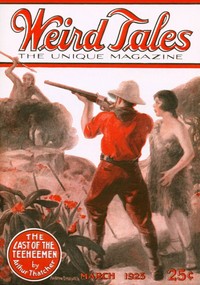
Whitehead’s narrative voice is consistently ironic, treating the match’s “natural depravity” with mock-seriousness. The story is structured as a biography of an object, moving from factory to final blaze, but the point of view shifts from the match to Pete in the last section. This shift is the story’s most striking formal feature: the match, once a protagonist, becomes a tool. The language also changes, from the clinical “inconsiderable cubic area” to the sensory “life-giving blaze.” The catalog subjects list “Anthropomorphism in literature,” and indeed the story tests the limits of that device. Readers should consider whether the match’s personification is sustained or abandoned, and how the ending reframes the earlier sections. The story originally appeared in Weird Tales (March 1925), and its blend of whimsy and horror fits that magazine’s range.

A Note on the Text

The Project Gutenberg edition is based on the 1925 magazine publication. The text includes a transcriber’s note identifying the source. No other editions are known. The story is short—about 5,985 words—and can be read in under thirty minutes. Readers should be aware that the excerpts provided here cover the opening and closing sections; the middle portion, which details the match’s journey through various hands, is not included in full. The story’s structure is linear, with no subplots or additional characters beyond the match, the young man, the boarding-house keeper’s husband, and Pete. The lynx is the only animal, and its role is purely antagonistic.

“The Thin Match” rewards attention to its tonal shifts and its treatment of the match as both character and object. The story’s brevity means that every detail—the brown streak, the hitch in the head, the coal smoke—carries weight. Readers may find it useful to reread the opening after finishing the climax, noting how the match’s difference is both a flaw and a necessity. The story does not moralize; it simply follows its premise to a logical, fiery conclusion.

Reading about that crooked match braving the cold made me think of a winter I spent alone, feeling just as out of place. There’s a tenderness in that kind of solitude, a quiet ache that The magnificent possession — A Closer Reading understood, too. It’s odd how a story finds you at the exact moment you need its warmth. I still remember that feeling.

There are no reviews for this eBook.

0
0 out of 5 (0 User reviews )

Add a Review

Your Rating *
There are no comments for this eBook.

Reader reflection

How did this book work for you?

Your answers remain private and are stored only in this browser.

Your progress 0 / 10
1

Have you finished this book?

2

How much did you enjoy the reading experience?

3

Would you encourage someone else to read it?

4

How much effort did this book require?

Related eBooks